Event 1
Rudy's father's ladder fall

[Rudy Baylor](entity:character-recall-character-rudy-baylor-3da7e073af66)’s father’s ladder fall turned the hazards at the center of his working life into a family tragedy. The accident left him comatose for a year and brought Rudy face to face with the legal questions his father had spent years resenting, though the family never filed a lawsuit over the fall.
## Background and Circumstances
Rudy’s father was an industrial engineer who worked long hours for a company that made ladders. Because ladders were frequently involved in lawsuits, his work in design made him a regular witness in depositions and trials. He came to hate lawyers, whose questioning and courtroom work, as Rudy remembered it, followed him home and fed his complaints. After a trial ended in a large verdict against the company, Rudy’s mother arranged for him to be hospitalized for a month. The company later went bankrupt, with blame directed at lawyers rather than at possible mismanagement.
The accident came amid an already strained relationship between father and son. Rudy had worked waiting tables and delivering pizza to support himself through college, and he recalled speaking to his father only twice during his four undergraduate years. After learning he had been accepted to law school, Rudy returned home to share the news. His mother later told him that his father stayed in bed for a week. The fall occurred two weeks after that visit.
## The Fall and Its Outcome
While changing a lightbulb in the utility room, Rudy’s father was on a ladder when it collapsed. He fell and remained in a coma in a nursing home for a year. He died after life support was withdrawn. The account establishes the accident’s basic circumstances without resolving every question about it: Rudy suspected that his father might have been partly intoxicated at the time, but the narrative presents this as his suspicion, not as a confirmed cause.
## The Unpursued Lawsuit
Several days after the funeral, Rudy raised the possibility of suing. His mother was not able to take up the idea. Rudy also recognized obstacles to a claim: his father had not been earning income, and Rudy believed that this would leave his life with little economic value under the tort system. His mother received $50,000 in life-insurance proceeds, but the family did not bring a case over the ladder fall.
The legal aftermath makes the accident more than a private loss in Rudy’s recollection. The ladder that had made his father a witness in company litigation was also the instrument of the fall, while the possible claim was constrained by grief and by a system that measured damages in economic terms. Rudy’s account links the tragedy to the family’s long, uneasy relationship with the law, without suggesting that the accident itself prompted his decision to become a lawyer.
Event 2
Great Benefit's denial of Donny Ray's transplant treatment
[Great Benefit's denial of Donny Ray's transplant treatment](entity:event-recall-event-great-benefit-747db0f8313a) is the dispute that brings [Dot Black](entity:character-recall-character-dot-black-b1b1af2d4e7c) and her family to [Rudy Baylor](entity:character-recall-character-rudy-baylor-3da7e073af66) and becomes the human center of their lawsuit. Great Benefit refuses to pay for a bone marrow transplant that the family says its policy covers, leaving Donny Ray without treatment his parents cannot afford. The refusal’s significance deepens as the company gives shifting explanations and the case develops from a single denied claim into a courtroom examination of its claims practices.
## The family’s claim and medical stakes
Dot Black tells Rudy that she and [Buddy Black](entity:character-recall-character-buddy-black-cad147c0d4fb) bought a Great Benefit medical policy five years earlier, when their twin sons were seventeen, and had never missed a premium. Donny Ray has acute leukemia. Dot says he was diagnosed the previous August, has already undergone an initial round of chemotherapy, and has been given about a year to live. His identical twin, [Ronny Ray Black](entity:character-recall-character-ronny-ray-black-23b7a82e55ab), is a suitable bone marrow donor, but the procedure is estimated to cost around $150,000—far beyond what the family can pay.
The refusal is not an abstract disagreement over policy language for the Blacks. Donny Ray lives with his parents, and they are trying to secure care for him as his illness advances. Dot says the hospital stopped providing further treatment after Great Benefit said it would not cover it; the family could not fund a transplant independently. She acknowledges that the procedure is expensive, but insists that the policy promises coverage. Her account places the company’s decision between a potentially available treatment and a family without the resources to obtain it.
## Changing grounds for refusal
When Rudy reviews the papers, he finds that Great Benefit has not rested on one consistent explanation. The company says Donny Ray is an adult and therefore no longer covered, although Dot has read the policy repeatedly and finds no provision ending his coverage at adulthood. Another letter calls the leukemia a preexisting condition. Dot’s account places the diagnosis roughly four years after the policy was issued, and she says the illness had been identified only months before the later refusal.
Other letters argue that bone marrow transplants are excluded or too experimental to count as acceptable treatment. Dot says her doctor examined the policy and considered the transplant routine treatment. Rudy sees an additional problem in the contract: it lists exclusions for transplants of other organs but does not specifically mention bone marrow. Great Benefit’s explanations thus shift among the patient’s age, the timing of his illness, the policy’s coverage, and the medical status of the procedure. The sequence makes the dispute look less like a straightforward application of a clear exclusion than a search for grounds to sustain a denial.
After seven written refusals, the company sends an eighth and final letter. Rather than merely restating a coverage position, it insults Dot. Rudy recognizes the letter as striking evidence of the way the company has treated the claim. At trial, Dot reads the denial letters in sequence, including the changing rationales and the final insult. The jury reacts with visible disbelief, and the courtroom falls silent when she finishes. The letter’s force comes not only from its language but from its place at the end of repeated refusals directed at a family that has kept paying its premiums.
## From denied treatment to courtroom evidence
Dot describes more than the correspondence. She has sought help from public officials and local hospitals, and has tried to raise money with friends and neighbors, without finding a way to secure the transplant. At trial, she identifies the policy and application and recounts the weekly visits of agent [Bobby Ott](entity:character-recall-character-bobby-ott-685fbe2edd34), who collected the payments. Her testimony connects the company’s paperwork to the household that bought coverage expecting protection when illness came.
The case also changes the scale of the question. Donny Ray dies before the trial testimony, and his recorded deposition is played to the jury. Edited to thirty-one minutes, it gives the jurors a sustained account from the person whose treatment the dispute concerned. Dot’s evidence and Donny Ray’s recording make the consequences of the refusal legible alongside the policy and denial letters; the insurance question is no longer only a contest between competing readings of a document.
Rudy’s trial presentation places the individual claim within the company’s wider conduct. He points to concealed documents, the testimony of [Jackie Lemancyzk](entity:character-recall-character-jackie-lemancyzk-ed51dd48f713), and Great Benefit’s statistics on policies, claims, and denials during 1991. In closing, he describes the evidence as showing a year-long experiment in denying legitimate claims. This is the plaintiff’s case about the broader practice, not a separate explanation offered in the original letters to Dot. Its effect is to frame the Black family’s experience as part of a pattern rather than an isolated administrative error.
## Consequences and significance
The denial has consequences that the correspondence itself cannot reverse: Donny Ray does not receive the transplant, and the treatment opportunity is lost before the case reaches trial. Rudy argues that the procedure was not experimental and could probably have saved Donny Ray’s life, pointing to the testimony of [Dr. Walter Kord](entity:character-recall-character-dr-walter-kord-ab3c830078f9) and the defense’s failure to offer contrary medical proof. The claim that coverage would have changed the outcome is therefore central to the plaintiffs’ argument, while the trial also asks the jury to judge Great Benefit’s handling of the claim and its broader conduct.
By the close of the plaintiff’s case, the jurors have heard Dot read the refusals, examined evidence about Great Benefit’s internal claims procedures, and watched Donny Ray’s recorded testimony. The company’s denial has moved through three forms: a family’s urgent request, a sequence of shifting written explanations, and evidence presented as part of a systematic practice. The supplied events stop as the case proceeds to the defense; they establish the stakes and the plaintiff’s account, but do not provide the jury’s verdict.
Event 3
Brodnax & Speer merges into Tinley Britt and Rudy is fired
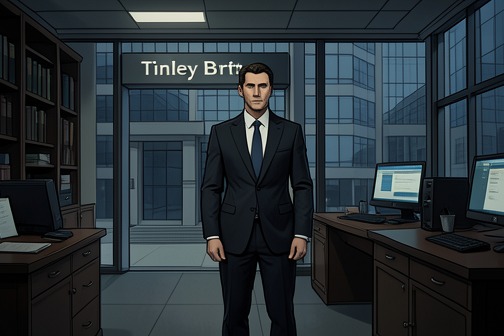
The merger of [Brodnax and Speer](entity:organization-recall-organization-brodnax-and-spee-a0b6c1d5505f) into [Tinley Britt](entity:organization-recall-organization-tinley-britt-5d779a949a08) becomes an abrupt severing of employment and expectation: the established firm’s partners sell out, its associates are dismissed, and [Rudy Baylor](entity:character-recall-character-rudy-baylor-3da7e073af66) loses the job he had secured before he could begin it. The episode turns a corporate transaction into a personal humiliation, exposing how little protection a hiring promise offers when a more powerful firm wants the clients behind it.
## Rumors and the imbalance between firms
At law school, Rudy first hears about the merger from classmates who have already learned that Brodnax and Speer is joining Tinley Britt. He had interviewed with the smaller firm, agreed to terms two months earlier, and understood that he would be its only new recruit from his graduating class. No one had told him of a planned merger. His classmates’ knowing questions make the news feel less like a formal announcement than a public revelation of something everyone else seems to know.
The firms stand at radically different scales. Brodnax and Speer has fifteen lawyers and a practice heavily devoted to defending car-accident cases. Tinley Britt has roughly 120 lawyers, substantial corporate and government clients, and an office in Washington. Its polished, elite reputation makes Rudy fear that the merger will leave no place for him. That fear is sharpened by the city’s crowded legal market: his classmates have spent the past year looking for work, and he sees little prospect of another opening.
## The associates are dismissed
Rudy goes to Brodnax and Speer’s offices in the Powers Building to find out what has happened. In the lobby he encounters Richard Spain, an associate who had once welcomed him during an interview visit. Spain is dazed and red-eyed. He explains that Loyd Beck called the associates into a conference room, told them the partners had agreed to sell the firm to Tinley Britt, and gave them an hour to clear their desks and leave. The decision has already been carried out by the time Rudy arrives; a uniformed security guard stands at reception.
Spain says the sale was about acquiring clients: Tinley Britt wanted the smaller firm’s business, and buying the partners was the way to obtain it. The associates, in that calculation, were expendable. Spain’s own case makes the imbalance concrete. After six years at the firm, billing 2,500 hours in the previous year and bringing in $375,000 in fees, he had been paid $80,000; he was nevertheless dismissed with no more than an hour to pack. His account makes clear that loyalty and hard work did not translate into security once the transaction was arranged.
Rudy learns that his name had come up in the partners’ meeting because he was the only incoming associate. Beck had reportedly been trying to reach him with the news. Rudy’s position is therefore not an exception to the layoffs but part of the same decision: he has lost his first job before it starts.
## The dismissal letter and Rudy’s response
Upstairs, the security guard blocks Rudy from the office and hands him an envelope bearing his name in red ink. The brief letter from Beck confirms that the merger was sudden and unexpected, offers a gentle explanation, and wishes him well. Its restrained tone contrasts with the bluntness of the outcome: the firm that had praised Rudy’s grades, writing, interviews, and fit has withdrawn the position without giving him a chance to enter it.
Inside the office, Rudy tosses the letter onto the floor. As he leaves, he spits on a bronze bust of the elder Brodnax; the pedestal rocks, and the bust’s head falls and crashes into a glass wall. A guard shouts and rushes after him, but Rudy runs down the stairs and gets out. The burst of anger gives physical form to the humiliation, while the abandoned bust turns the firm’s distinguished name into an object Rudy can reject, if only in that moment.
## Immediate aftermath and significance
Near seven o’clock, Rudy stops at a convenience store and buys a cheap six-pack of beer with the little money left in his pocket. He recalls how recently Beck had told him that the firm’s lawyers unanimously thought he would fit in and that his future there looked bright. Now the partners have taken the deal, the associates are gone, and the promise of a beginning has collapsed into unemployment. Rudy drinks in his car and drives through [Memphis](entity:location-recall-location-memphis-43c9d5e0eed8) as the hours pass.
The episode establishes a pattern of vulnerability that shapes Rudy’s early career: entry into the profession depends not only on qualifications but also on decisions made by powerful firms pursuing financial advantage. It also marks a sharp reversal in his prospects. A job that seemed to offer a secure foothold disappears through a merger he did not know was coming, leaving him with no warning, no position, and little money.
Event 4
Rudy receives Texaco’s debt-collection suit and his landlord’s eviction summons
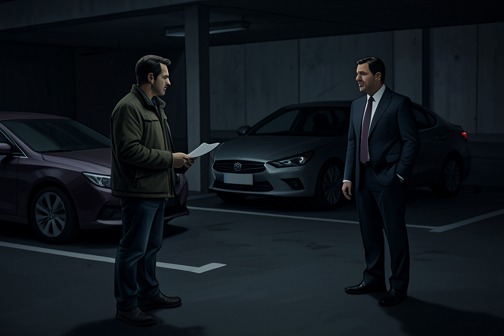
[Rudy receives Texaco’s debt-collection suit and his landlord’s eviction summons](entity:event-recall-event-72931f2b0da7) in one encounter that makes his private financial collapse impossible to ignore. A process server confronts him in the dark parking lot of [The Hampton](entity:location-recall-location-the-hampton-7ab814f39aa8), then warns that police are seeking him over a law office damaged earlier that day; by morning, Rudy’s friend [Booker](entity:character-recall-character-booker-de6b30c46e06) is trying to keep an arrest from derailing Rudy’s chance to become a lawyer.
## The Summons at The Hampton
Rudy returns to The Hampton shortly before two in the morning, after a day of professional and personal upheaval. In the parking lot, a man gets out of his car and comes straight toward him. Rudy confirms his identity, and the stranger thrusts papers at him: one is a summons from Texaco, and the other concerns eviction from his apartment. The process server identifies himself and explains that the documents contain the court date and the lawyers’ names, though the darkness prevents Rudy from reading them there.
The location sharpens the force of the notice. The Hampton is the decaying building Rudy has called home for nearly three years, and he has already fallen behind on its rent. The eviction papers therefore do not introduce a distant financial worry; they put his precarious housing directly at stake. The Texaco suit arrives alongside them, making the encounter a pileup of legal claims rather than a single isolated bill.
## A Second Legal Threat
As he prepares to leave, the process server adds that he is an ex-cop who keeps a police scanner in his car. He says he heard a call about a man named [Rudy Baylor](entity:character-recall-character-rudy-baylor-3da7e073af66) who had damaged a downtown law office; the description and the make and model of the car match. When Rudy asks whether the police will arrest him, the man says they will and advises him to find somewhere else to sleep. The warning transforms service of the civil papers into notice of a separate, immediate danger: Rudy is not only facing debt and eviction but may also be wanted by police.
The encounter leaves Rudy with no clear place to go. Rather than return to his apartment, he calls Booker from a pay phone and goes to Booker’s home. He admits that he has been drinking and recounts the events since the two friends parted the previous afternoon, including the process server, the Texaco suit, and the eviction notice. Rudy’s account places the papers at the end of a day in which his remaining confidence and resources have already been badly depleted.
## Booker’s Response and the Stakes
Booker recognizes that the police issue could have consequences beyond an arrest. The [Tennessee](entity:location-recall-location-80f50cef7ee1) bar exam is three months away, and, as Booker warns, an arrest and conviction could ruin Rudy’s prospects before the screening committee. The summonses thus intersect with Rudy’s professional future: the threatened housing and debt crisis is joined by the possibility that his conduct will close off the career he is trying to enter.
Booker proposes calling [Marvin Shankle](entity:character-recall-character-marvin-shankle-e58f97e1e935), his future employer and a prominent [Memphis](entity:location-recall-location-memphis-43c9d5e0eed8) lawyer, who may be able to reach his brother and pull strings with the police. Rudy accepts the plan but immediately asks whether there might also be a job for him. He says he is facing bankruptcy and fears that other creditors may be waiting to serve him with papers. While Booker studies the Texaco suit and eviction notice, Charlene brings Rudy coffee and aspirin, then cooks bacon and eggs. The practical care of Booker’s household briefly gives Rudy shelter, but it does not resolve the debts or the police threat.
## Consequences and Significance
The scene gathers several kinds of insecurity into a single night: a creditor’s lawsuit, the loss of Rudy’s rented home, possible arrest, and the danger to his bar admission. Its sequence matters. The process server first hands over documents Rudy cannot read in the dark, then adds information that makes those papers seem almost secondary to the possibility of police custody. The material crisis is at once legal, economic, and professional.
Booker’s intervention offers a possible route toward preventing an arrest, not a settled outcome. At this point, there is no confirmation that the police have found Rudy or that the charges have been resolved. The event instead establishes the narrowness of his position: with little money, no job, and creditors closing in, Rudy must rely on a friend’s connections while trying to preserve the future for which he is preparing.
Event 5
Rudy files for Chapter 7 personal bankruptcy
[Rudy Baylor](entity:character-recall-character-rudy-baylor-3da7e073af66)’s Chapter 7 bankruptcy filing turns his personal financial collapse into a legal proceeding he must navigate for himself: with eviction set for the following day, he submits his own petition, invokes the automatic stay, and learns how little separates a debtor from the lawyers who make a living handling such cases. The episode brings his unemployed, cash-paid life into the courthouse and leaves him contemplating whether bankruptcy law may become his own uncertain future.
## Causes and Financial Circumstances
Rudy’s liabilities have accumulated during a period when he expected graduation to lead quickly to steady legal work. He used credit cards to buy expensive [Christmas](entity:time-recall-time-christmas-a573265d0167) gifts for [Sara Plankmore](entity:character-recall-character-sara-plankmore-fc2e0e511202): a gold-and-diamond tennis bracelet costing $1,700 and antique silver earrings costing $1,100. He also charged $300 for champagne and food intended for a holiday meal. The banks had recently raised his credit limits, and he calculated that he could manage the required payments until summer, when he expected to be employed. Those expectations failed. After Sara ended the relationship, Rudy returned the gifts to the stores, but thieves broke into his apartment on the day after New Year’s and stole the jewelry along with his old television, stereo, and a jar of quarters. He filed a police report and showed the officers his credit-card receipts; the sergeant advised him to contact his insurer. The purchases remained his debt even though the stolen jewelry was gone.
By the time he prepares the petition, Rudy has lost his job at [Yogi’s](entity:location-recall-location-yogi-s-163094a4b41b) and takes other work for cash, without records or wages available for garnishment. He has discussed his predicament with [Prince Thomas](entity:character-recall-character-prince-thomas-9490c826dc2b), who offers to lend him money, but Rudy declines to rely on a loan premised on the belief that he will soon be a prosperous lawyer. Meanwhile, Texaco has sued him for $612.88, including costs and attorneys’ fees, and his landlord has sued for $809 on the same basis. Other creditors are sending threatening letters. The landlord’s eviction is scheduled for the day after Rudy files, making the timing of the petition immediate rather than theoretical.
## Preparing and Filing the Petition
[Booker Kane](entity:character-recall-character-booker-kane-d1aae9f7ebbd) finds the bankruptcy forms in the Shankle firm, where an associate occasionally handles bankruptcies. The forms ask for assets, liabilities, employment information, and pending litigation. Rudy identifies the proceeding as Chapter 7, or straight bankruptcy, in which assets are used to cover debts and the debts are discharged. His own small estate makes the asset schedule relatively simple, but the petition still forces him to set out his precarious financial position formally.
At the courthouse, Rudy files without hiring counsel. A debtor who is not a lawyer may file a petition independently, although the option is not prominently advertised. At the clerk’s office, a clerk studies Rudy’s denim shirt and khakis and asks loudly whether he is a lawyer; he says no, and confirms that he is the debtor. He pays the $80 filing fee in cash. His checking account is absent from the petition because he closed it the previous day, eliminating an account with a balance of $11.84.
The petition lists a heavily used Toyota valued at $500, furniture and furnishings at $150, a CD collection at $200, law books at $125, and clothing at $150. Rudy understands these listed possessions to be personal property exempt from the bankruptcy proceedings, so he can keep them; the Toyota, however, still requires continued payments. The clerk stamps the petition and gives him a copy and receipt. Before he leaves, Rudy notes the date, time, and courtroom assigned for his initial hearing. The transaction is spare and procedural, but its details make visible the narrow inventory of property he is trying to preserve.
## The Automatic Stay and the Courthouse
The filing’s most urgent consequence is the automatic stay under the Bankruptcy Code. Rudy explains that it halts legal proceedings against a debtor, the same temporary protection that leads large corporations, including Texaco, to seek bankruptcy court relief. His landlord cannot proceed with the scheduled eviction the next day and cannot even call to berate him. The protection does not erase the circumstances that brought Rudy to court, but it interrupts the immediate threat of losing his home.
The courthouse floor is crowded with lawyers: three full-time bankruptcy judges hold court there, and dozens of hearings bring lawyers for debtors and creditors through the building each day. As Rudy walks past the courtrooms, he hears disputes over unpaid medical bills and the value of a pickup truck. In the clerk’s office, lawyers who know the assistant clerks exchange familiar conversation and flirtation while waiting to file. The scene makes bankruptcy look at once routine and busy, a specialized practice sustained by a steady stream of people and businesses in financial trouble.
After the filing, Robbie Molk, a lawyer Rudy recognizes from classified advertisements for Chapter 7 services, approaches him with a business card. Molk initially pitches a $150 down payment, then says a Chapter 7 can be tricky and offers to take over for $200, citing his full office and staff. Rudy declines twice and pushes past him. The encounter sharpens the contrast between the debtor’s attempt to manage the procedure alone and the lawyer’s practiced effort to turn that vulnerability into paid work.
## Consequences and Significance
On the elevator ride down, Rudy listens to lawyers debate exemptions and secured and unsecured debts. Their talk is difficult to follow, yet the filing has brought him into the world where those issues govern people’s immediate fortunes. He remembers a professor’s prediction that bankruptcy would be a growth area amid economic uncertainty, job cuts, and corporate downsizing. The crowded docket seems to confirm the prediction, although Rudy observes the irony that the professor had never billed an hour in private practice.
Rudy’s bankruptcy is therefore both a concrete response to debt and an encounter with a possible line of work. He has no job as a lawyer, lacks the money to hire one for this matter, and has just watched bankruptcy practitioners handle a crowded stream of filings. As the elevator descends, he recognizes that he has no idea what he will be doing a year later; it seems entirely possible that he may return to the same courthouse and take part in the same conversations. The filing secures a stay against the next day’s eviction, but it offers no comparable certainty about his professional future.
Event 6
Rudy decides to represent the Black family in their insurance case
[Rudy decides to represent the Black family in their insurance case](entity:event-recall-event-5edf85e21f3c) after investigating Great Benefit’s refusal to cover [Donny Ray Black](entity:character-recall-character-donny-ray-black-d0072c3fb976)’s bone marrow transplant. The decision transforms a law-school assignment into a fight over whether an insurer can delay or deny an urgent claim until a family gives up—and whether a novice lawyer can act for that family before he is licensed.
## The case Rudy inherits
Before Rudy approaches [Dot Black](entity:character-recall-character-dot-black-b1b1af2d4e7c), [Max Leuberg](entity:character-recall-character-max-leuberg-34913c102c9e) explains the economics of debit insurance: inexpensive policies are sold door to door, premiums collected regularly, and claims often denied on whatever grounds the company can find. Leuberg says only about one in thirty bad-faith denials reaches court. In his account, companies count on people with limited resources being wary of lawyers and the legal system. Even when a case is brought, juries may award the medical bills and only a modest additional penalty, leaving a wealthy insurer little reason to change its practices.
That pattern sharpens the stakes for the Black family. Donny Ray is dying, and Rudy understands the dispute to concern a transplant he believes the policy entitles him to receive. Leuberg cautions that Rudy has heard only the family’s side; if their account and the records are accurate, he calls the case good, though not great. He also warns that [Tennessee](entity:location-recall-location-80f50cef7ee1) juries are conservative and that a trial could bring a small verdict. His practical advice is to refer the family to an established trial lawyer, contact that lawyer, and write a report for [Professor Howard L. Smoot](entity:character-recall-character-professor-howard-l-2284d551d77c). Rudy instead continues investigating and decides to take responsibility himself.
## Dot Black agrees to sue
When Rudy visits Dot, he finds her at home, where [Buddy Black](entity:character-recall-character-buddy-black-cad147c0d4fb) spends much of the day sitting in the family’s old Ford Fairlane. Dot describes him as unwell and says he drinks, while Donny Ray spends much of his time in bed. These circumstances are part of the family’s strain, but the immediate question is the claim: Great Benefit first denied it the previous August, soon after Donny Ray’s diagnosis, and Dot kept writing to the company because she expected it to honor a policy for which the family had paid its premiums regularly.
Dot explains that she had never used a lawyer and had hoped Great Benefit would pay for the bills and treatment. Rudy tells her he has spent hours reviewing the records and days researching the law, and advises her to sue promptly. He is candid that the company may stall for months or years, and that filing suit might lead either to a quick settlement or to trial and appeal. Dot answers that Donny Ray may have only months. Her urgency turns the risks from abstract litigation advice into a question of time.
Rudy offers to handle the case on contingency: he will receive a third of any recovery, after Donny Ray’s medical bills are paid, and nothing if there is no recovery. He tells Dot they will sue for millions, while acknowledging that he does not expect to recover that amount. What appeals to her is not a promise of wealth so much as the chance to make Great Benefit answer for its conduct. She tells him to proceed at once.
## The professional and ethical risk
Dot’s agreement does not resolve Rudy’s authority to act. He has a legal-services contract in his pocket, but recognizes that he cannot ethically sign an agreement to represent clients until he has passed the bar and been admitted to practice. He therefore does not present the contract or formally sign her up at that meeting. He says he will probably need to associate another lawyer, whose name can go on the filings until he is admitted. Dot appears not to register the complication; her concern is how much the case will cost and how quickly Rudy can get to work.
The moment establishes a tension that continues through the case. Rudy’s knowledge of the records and investment in the family’s claim give him a reason to act, while his unlicensed status sets a boundary he knows he cannot ignore. His choice is thus not simply to accept a promising lawsuit. He commits himself to advancing the Blacks’ interests while facing the practical and ethical limits of his position.
## From private claim to corporate evidence
The later proceedings show how much larger the case becomes than the initial dispute over coverage. [Cooper Jackson](entity:character-recall-character-cooper-jackson-61f117f0fd6c) describes a claims process in which a handler denies a claim, requests five years of medical records, and sends the file between claims and underwriting. The insured receives successive letters while the departments issue instructions that leave payment pending. According to Jackson, many people give up before seeking counsel. When Rudy examines Jackson’s manuals, he finds [Section U](entity:expression-recall-expression-section-u-f7e7331ad1e1) in both the claims and underwriting versions. The sections were missing from the manuals produced to him in discovery; read together, the documents direct the departments to keep a claim unpaid while generating a paper trail that makes the process appear orderly.
At trial, former claims handler [Jackie Lemancyzk](entity:character-recall-character-jackie-lemancyzk-ed51dd48f713) testifies that, during 1991, Great Benefit adopted a year-long policy of initially denying every claim over one thousand dollars, regardless of its legitimacy. She says the scheme generated about forty million dollars in additional savings and that large claims were generally paid only after an insured hired a lawyer and applied pressure. She also explains that the Black claim was closely monitored after the company recognized that the policy did not exclude bone marrow transplants, even though Donny Ray’s medical records indicated that he would ultimately die without one.
The family’s letters make the consequences legible to the jury: the denials give different reasons, including preexisting conditions, Donny Ray’s status as an adult household member, and claims that bone marrow transplants are excluded or experimental. Dot reads the letters, including the insulting denial known as the Stupid Letter. Donny Ray’s recorded testimony, edited to thirty-one minutes, is later played to the jury. Rudy’s decision has carried the family’s experience from correspondence and medical records into a courtroom where both the denial process and its human cost can be examined.
## The decision’s significance
Rudy’s closing argument joins the individual claim to the company’s finances. Using Great Benefit’s figures, he places available cash, reserves, and undistributed surpluses at four hundred and seventy-five million dollars, alongside an admitted net worth of four hundred and fifty million. He argues that punitive damages must be large enough to affect a company of that size. The defense, meanwhile, presents the requested transplant cost as an uncovered expense and frames the family’s demand for additional damages as excessive. Rudy answers that Great Benefit’s conduct and its late willingness to offer money must be judged against what the jury has heard about the denials and the concealed manuals.
These later events do not establish the jury’s verdict in the evidence presented here. They do show what Rudy’s choice set in motion: a case that began with Dot’s decision to trust an inexperienced, not-yet-admitted law student becomes a test of the insurer’s stated reasons, its internal procedures, and the consequences of making desperate policyholders bear the burden of pursuing a claim. The decisive turn is not a guaranteed victory but the family’s passage from waiting for Great Benefit to act to demanding an answer in court.
Event 7
Birdie reveals her hidden Atlanta inheritance to Rudy
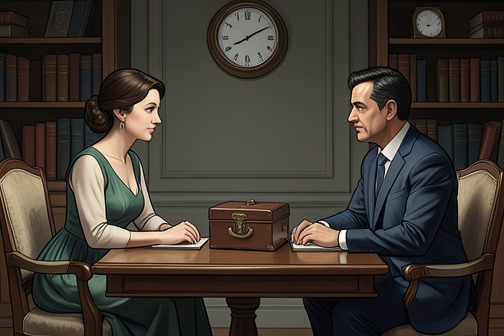
[Miss Birdie](entity:character-recall-character-miss-birdie-34b195a54978)’s disclosure of her hidden [Atlanta](entity:location-recall-location-9d501ca2fac1) inheritance changes [Rudy Baylor](entity:character-recall-character-rudy-baylor-3da7e073af66)’s understanding of the will he has been asked to prepare: the elderly widow is not merely protecting a comfortable savings account but concealing a fortune her family does not know exists. The revelation comes gradually, as estate-planning questions lead her from an unnamed place where the money is kept to the story of her second husband and an inheritance that reached her through his death without a will. She shares the history with Rudy, but still withholds the fortune’s exact size.
## The Conversation Turns to the Money
Rudy approaches the subject in his capacity as Miss Birdie’s lawyer. He tells her that he needs to know what assets the estate contains to plan responsibly, including whether the money is held in real estate, stocks, bonds, cash, or other investments. His concern is practical as well as inquisitive: liquid assets are generally used first to pay taxes, while real estate is treated as a last resort. The details of the estate therefore matter to the will she has asked him to prepare.
Miss Birdie resists the legal language and suspects that lawyers want their names placed in their clients’ wills. She has reason to distrust them: she says her previous lawyer wanted a bequest after realizing she was wealthy. Rudy reassures her that he is not seeking money for himself and frames his questions as part of his duty. She softens, but keeps control of what she reveals. Asked where the fortune is, she answers only that it is all in one place: Atlanta.
The setting and pace give the disclosure room to emerge. Unlike their earlier meeting at the [Cypress Gardens Senior Citizens Center](entity:organization-recall-organization-cypress-gardens-85a12448af35), Miss Birdie is not pressed by lunch duties or other responsibilities. She turns her coffee cup as she considers Rudy’s questions, and speaks softly before explaining that no one in [Memphis](entity:location-recall-location-memphis-43c9d5e0eed8) really knows about the money. Her children know something of the family’s savings, but not the Atlanta assets. The conversation proceeds in stages rather than as a complete accounting: Rudy asks, she tests his trustworthiness, and the story grows more specific without resolving its central numerical mystery.
## How the Fortune Reached Her
Miss Birdie distinguishes the money she inherited from her first husband, Thomas, from the much larger fortune connected to Tony, her second husband. When Thomas died eleven years earlier, he left her close to one hundred thousand dollars in savings. Her sons, and especially their wives, believe those savings have since grown to five times that amount. That is the wealth they know about; Atlanta is the hidden part.
She says she married Tony about two years after Thomas died. Tony came from Atlanta and was passing through Memphis when they met. They lived together on and off for five years, fought frequently, and eventually he left for home. Miss Birdie describes him as a deadbeat who pursued her money, but the fortune she later received did not come from money he knowingly kept for her. It came through a separate inheritance in his family, one whose existence she says neither of them understood at the time.
Tony had a wealthy brother whom Miss Birdie characterizes as mentally unstable. Two days before Tony died, that brother died in Florida, leaving Tony a fortune. Tony died without a will, with Miss Birdie as his wife. A large Atlanta law firm then contacted her and told her that, under Georgia law, she was entitled to substantial money. She says the amount was far beyond what Thomas had left her, but does not give Rudy a figure.
## Secrecy, Trust, and the Unfinished Accounting
The inheritance had remained outside the knowledge of Miss Birdie’s Memphis family. She says she has never told anyone about it before, and Rudy’s questions reveal that her earlier discussion with [Reverend Kenneth Chandler](entity:character-recall-character-reverend-kenneth-ch-d609bdda13d0) was not a full disclosure: although she had talked about the money with him, she may have lied and is sure she did not tell him where it came from. Her account makes secrecy a deliberate feature of how she has handled her wealth, not simply a misunderstanding about the value of the savings her children know about.
Her previous lawyer had received the amounts of the gifts specified in her will, but not the complete picture of her assets. Miss Birdie says she did not trust him and withheld the fortune’s total; after he realized she was wealthy, he wanted to be included in the will. Rudy calculates that the gifts in the old will add up to at least twenty million dollars, meaning that the previous lawyer knew of at least that much. The total remains uncertain, however, because Miss Birdie still does not reveal how much she actually has.
Rudy invokes attorney-client privilege when she asks whether he will tell anyone. He promises that, as her lawyer, he cannot disclose what she has told him. The assurance answers her immediate concern, but the exchange also establishes the practical stakes of his role: to advise her about taxes and the estate, he needs information she has guarded even from another lawyer. Miss Birdie postpones the exact amount until perhaps the following day. She and Rudy leave the kitchen for the rear patio, where she shows him a new fountain beside the rosebushes. The conversation ends with the inheritance’s origin revealed, its value still concealed, and the confidence between client and lawyer newly tested.
Event 8
Donny Ray Black is unable to get a bone marrow transplant
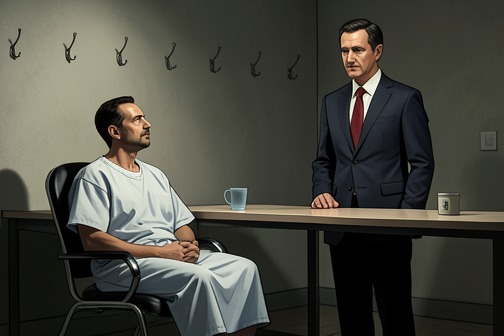
[Donny Ray Black](entity:character-recall-character-donny-ray-black-d0072c3fb976)’s inability to obtain a bone marrow transplant turns an insurance dispute into a question of life and death. His leukemia was detected in time for treatment, and his identical twin was an exact marrow match; the transplant could have saved his life. But his family could not afford it, despite holding insurance with [Great Benefit Life Insurance Company](entity:organization-recall-organization-great-benefit-li-1b1fecc4c37d), which refused the claim. Donny Ray’s worsening illness, the family’s efforts to secure care, and the company’s shifting explanations become the central evidence in the lawsuit that follows.
## The Missed Chance for Treatment
When Donny Ray explains his circumstances to [Rudy Baylor](entity:character-recall-character-rudy-baylor-3da7e073af66), he describes the difference between the chance he once had and the condition he has reached. Eleven months earlier, he weighed 160 pounds; now he weighs 110. He says the leukemia had been found early enough to treat and that his identical twin provided a perfect bone marrow match. The transplant would have saved his life, but the family could not pay for it.
The passage of time has changed the medical odds. Donny Ray estimates that he is eighty percent gone. Six months earlier, he says, he would have had a ninety percent chance of being cured. The figures make the lost opportunity painfully concrete: the treatment was not merely hypothetical, and the chance it offered had narrowed while the claim went unpaid. As Donny Ray speaks, he struggles for breath and briefly suffers a frightening episode. Rudy’s response marks a turning point in his relationship to the case: he stops seeing the Black family chiefly through its complications and accepts Donny Ray as a client who is counting on him.
## A Family’s Effort to Secure Representation
The family’s difficulty extends beyond paying for treatment. To bring the lawsuit, all three clients must sign a legal-representation agreement. [Buddy Black](entity:character-recall-character-buddy-black-cad147c0d4fb) refuses to come inside, so [Dot Black](entity:character-recall-character-dot-black-b1b1af2d4e7c) takes the papers out to him at the car. Donny Ray recalls an earlier attempt to have Buddy’s signature notarized: Buddy had been barely conscious, and the family’s watchful cat attacked the visiting notary, adding a doctor’s bill and the cost of replacing her pantyhose to the expense of getting the paperwork done.
The incident gives the legal formality a domestic, precarious setting. Dot returns with the contract bearing Buddy’s illegible signature, and she and Donny Ray sign it as well. Donny Ray then asks Rudy to use whatever the case brings to help his family, explaining that they have had a hard life. His request makes clear that the lawsuit matters to him not only as an effort to obtain treatment but also as a possible means of providing for those he will leave behind.
## The Denials Become Evidence
At trial, Dot recounts the family’s attempts to find help. She contacted Great Benefit repeatedly, appealed to elected officials, approached local hospitals about free care, and organized friends and neighbors to raise money. Those efforts failed. She identifies the policy and its application, and describes the weekly visits of [Bobby Ott](entity:character-recall-character-bobby-ott-685fbe2edd34), the agent who collected the premiums.
Dot reads the jury the first seven denial letters. Their stated grounds shift: some deny the claim without explanation; others send it between claims and underwriting for review; still others invoke a preexisting condition, Donny Ray’s status as an adult outside the household, lack of transplant coverage, or the claim that marrow transplantation is experimental. The accumulation of reasons turns the family’s repeated requests into a record of institutional evasion. The next letter, the insulting denial that becomes known as the Stupid Letter, leaves jurors visibly stunned when Dot reads it aloud and again at Rudy’s request.
Great Benefit’s defense emphasizes that the policy cost eighteen dollars a week and did not cover the transplant, arguing that the family seeks money it was not entitled to receive. The policy’s wording, however, does not specifically name bone marrow transplantation, while a newer policy version supplied during the case expressly excludes it. [Dr. Walter Kord](entity:character-recall-character-dr-walter-kord-ab3c830078f9)’s testimony supports the view that the procedure was not experimental, and the defense offers no contrary medical proof in the account of Rudy’s summation. The gap between the older policy’s language and the newer version sharpens the dispute over whether Great Benefit is interpreting coverage or relying on an omission.
## From Personal Loss to a Public Case
Rudy files suit against Great Benefit Life Insurance Company and Bobby Ott, seeking $200,000 in actual damages and $10 million in punitive damages. At trial, Dot’s account and the denial letters make the consequences of the coverage decision legible as a family’s experience rather than an abstract disagreement over policy language. Donny Ray’s recorded testimony, edited to thirty-one minutes, is then played for the jury. The jurors watch his image on a screen; afterward, the courtroom remains quiet, and Dot weeps at the plaintiffs’ table.
Rudy’s closing argument connects Donny Ray’s missed treatment to evidence of Great Benefit’s broader conduct. Using testimony from [Jackie Lemancyzk](entity:character-recall-character-jackie-lemancyzk-ed51dd48f713) and company statistics, he puts figures about policies, claims, and denials on a chalkboard, arguing that the company’s decision-makers had instituted a one-year scheme to deny legitimate claims. Great Benefit’s lawyer offers $200,000 as a proposed measure of the family’s loss and urges the jury to treat a larger award as greed. Rudy answers that the offer does not address the company’s conduct, and reminds the jurors that Dot intends to give the money to the American Leukemia Society.
Donny Ray’s death, established in Dot’s testimony, makes the failed transplant irreversible: the treatment that might have saved him can no longer be provided, and the family’s day in court cannot restore the lost chance. The evidence cataloged here ends with the jury beginning its deliberations, not with a verdict. The event’s significance lies in the way a specific medical opportunity—a timely diagnosis and an identical-twin donor—meets a denied insurance claim, then becomes the organizing human fact through which the trial examines Great Benefit’s practices.
Event 9
The Black family sues Great Benefit
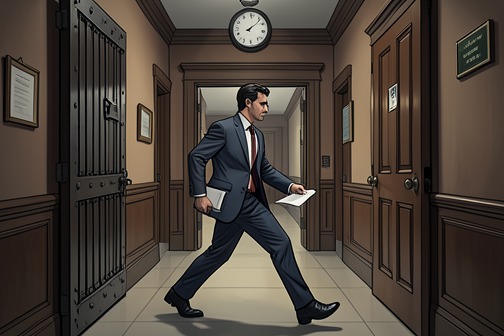
[The Black family sues Great Benefit](entity:event-recall-event-great-benefit-bf70cef8644d) after [Rudy Baylor](entity:character-recall-character-rudy-baylor-3da7e073af66) moves to secure their claim before his former employer, [Barry X. Lancaster](entity:character-recall-character-barry-x-lancaster-494e7fd2d2d9), can take control of it. The complaint is filed minutes before the courthouse clerk’s office closes, in the name of counsel who can legally represent the family. What starts as a hurried act of procedural self-preservation becomes the vehicle for exposing Great Benefit’s systematic denial of claims and confronting the economic logic behind insurance bad faith.
## Causes and Stakes
Rudy’s decision follows his dismissal from [Jonathan Lake](entity:character-recall-character-jonathan-lake-f5a17ac6e94d)’s firm and his discovery that Lancaster has used him while maneuvering to take the Black case. The Blacks have already signed with Lake, so Rudy needs both a new legal sponsor and a rapid way to establish that they are pursuing the case through another firm. He brings [Bruiser Stone](entity:character-recall-character-bruiser-stone-a59658d034f9) a prepared draft complaint and a termination letter addressed to Lancaster, arguing that the filing must happen that day because Lancaster may file first. Bruiser, attracted by the chance to beat the Lake firm to court, agrees to put his name on the suit and introduces Rudy to [Deck Shifflet](entity:character-recall-character-deck-shifflet-d9acaca8aa29), an associate with experience reviewing insurance policies.
The case concerns [Donny Ray Black](entity:character-recall-character-donny-ray-black-d0072c3fb976), who is dying of leukemia and needs a bone-marrow transplant that Rudy believes the policy covers. Great Benefit has refused the family’s claim. [Max Leuberg](entity:character-recall-character-max-leuberg-34913c102c9e) explains the broader context to Rudy: low-cost debit insurance is sold door to door to low-income policyholders, whose premiums are collected regularly, while claims are often met with inventive reasons for denial. In Leuberg’s account, only about one in thirty bad-faith denials reaches court, in part because the companies target people wary of lawyers and the legal system. Even when an insured person sues, juries may award the underlying medical costs but only a modest punitive sum, leaving a wealthy insurer with little financial reason to change its conduct.
## Preparing and Filing the Complaint
Rudy gives Bruiser a ten-minute account of the Black case and explains the dispute with Lancaster. He presents the draft complaint, which he and Lancaster had worked on earlier, along with the letter for the three Black family members to sign terminating Lancaster’s representation. Bruiser reads both documents and approves the plan: Rudy will file the action, take a copy to the family, and secure their signatures on the termination letter and a new agreement. Although Rudy expects to do most of the work and anticipates needing help at trial, he has no license of his own; Bruiser’s name supplies the formal authority the filing requires.
Five minutes before closing, Rudy files a four-page complaint against [Great Benefit Life Insurance Company](entity:organization-recall-organization-great-benefit-li-1b1fecc4c37d) and [Bobby Ott](entity:character-recall-character-bobby-ott-685fbe2edd34), the missing agent who sold the policy. It seeks $200,000 in actual damages and $10 million in punitive damages. Rudy has not established Great Benefit’s net worth when he chooses the punitive figure; he selects it because, in his words, it has a nice ring to it. The complaint bears J. Lyman Stone’s name as counsel of record, not Rudy’s, and the filing fee is paid by a firm check. These details mark the difference between Rudy’s personal initiative and the legal standing needed to bring the family’s claim into court.
## The Clients Change Counsel
After filing, Rudy drives to the Black family’s home in [Granger](entity:location-recall-location-granger-dde41ff71657) and gives them a copy of the complaint. Buddy is outside; Dot brings Donny Ray from his room, and the family gathers around the table to read the document. The large dollar figures impress them, especially the demand for $10 million, which Dot repeats as if it were a winning lottery number. Rudy explains why he has left Lake’s firm, presenting the split as a difference in strategy: the firm was not moving quickly enough for him and did not share his hard-charging approach.
The family’s immediate concern is not the internal contest among lawyers but what will happen next, how soon they might hear something, and whether a settlement could come quickly. Rudy knows that litigation will take much longer than they want, and recognizes the cruelty in withholding that reality while trying to keep their spirits up. He talks rapidly through the new paperwork. Dot stomps through the weeds and argues with Buddy to get his signatures; the family signs the termination letter to Lancaster and a new contract with J. Lyman Stone’s firm. The complaint does not itself resolve the family’s need for treatment or money, but it gives them the concrete assurance that they have finally taken their grievance to court. They take satisfaction in having fought back against a company they believe wronged them.
## From Individual Claim to Corporate Practice
The later course of the lawsuit gives the initial filing a wider meaning. In testimony, Great Benefit employee [Jackie Lemancyzk](entity:character-recall-character-jackie-lemancyzk-ed51dd48f713) describes a policy that began on January 1, 1991: for twelve months, claims above $1,000 were initially denied, regardless of their legitimacy, while smaller claims could also be rejected if the company could find an arguable reason. She says the experiment generated roughly $40 million in additional money. The Black claim was first denied under this policy; once the words acute leukemia drew attention, Russell Krokit monitored the file, and the company continued withholding payment despite the policy’s coverage for bone-marrow transplants and medical records indicating that Donny Ray would eventually die without one.
The lawsuit also makes visible the machinery that can keep a denial in place. [Cooper Jackson](entity:character-recall-character-cooper-jackson-61f117f0fd6c) describes a post-claim process in which a claims handler denies the claim, orders five years of medical records, and sends the file to underwriting; the two departments exchange denials, instructions, and further-review notices while the insured receives more letters and waits. In Jackson’s account, each department can tell the other not to pay, while the promised further notice never arrives. This explanation turns what might appear to be a single disputed decision into a recurring institutional method, one that depends on many policyholders giving up before consulting a lawyer.
At trial, Rudy uses Great Benefit’s own financial statements to show the scale of the defendant’s resources. He adds cash, reserves, and undistributed surpluses on a chalkboard to reach $475 million, while the company’s admitted net worth is $450 million. The figures sharpen the question already implicit in Leuberg’s warning: a punitive award that barely registers for a large insurer may do little to deter profitable denials. By connecting Donny Ray’s denied treatment to the company’s larger claims practices and financial capacity, the case transforms an individual family’s demand for coverage into a test of whether litigation can impose a meaningful cost on corporate misconduct.
## Significance
The filing is both a tactical race and a change in the Black family’s position. Rudy has to act before Lancaster can file, and the family must formally end its old representation before proceeding with the new one. Yet the lawsuit’s force lies beyond that procedural victory. The claim begins with a policy, a denied transplant, and a family seeking help; the proceedings reveal a company-wide experiment that treated denial as a way to generate savings and relied on the low likelihood that policyholders would sue. The suit therefore gives the family a means to contest Great Benefit’s decision while exposing the imbalance between people who may not know how to challenge a denial and an insurer able to absorb small judgments as a cost of doing business.
Event 10
Memphis prom riverboat sinks

The [Memphis prom riverboat sinks](entity:event-recall-event-5b11f7d219b4) after an oil barge breaks free from its tug and strikes a paddle wheeler carrying about three hundred students. The collision turns a high-school celebration into a night of rescue and loss, and then into a test of how lawyers respond to disaster: while [Deck Shifflet](entity:character-recall-character-deck-shifflet-d9acaca8aa29) sees potential business, [Rudy Baylor](entity:character-recall-character-rudy-baylor-3da7e073af66) turns away from soliciting the families. The event exposes a sharp divide between grief as a human emergency and grief as a source of legal fees.
## The Collision and the Call
The wreck happens shortly after eleven at night. The barge drifts downriver after separating from its tug and hits the paddle wheeler, which is being used for a high-school prom. The boat goes down near Mud Island, close to the bank. The account gives no further explanation for the barge breaking free; the immediate facts are the collision, the sinking, and the large number of young people aboard.
At almost four in the morning, [Deck](entity:character-recall-character-deck-b3382237668e) calls Rudy on his car phone, speaking excitedly and telling him to meet at the curb. Deck is less than three blocks away and arrives in a ragged minivan. Rudy has been asleep for less than an hour; he climbs in without having time to brush his teeth. Deck explains that [Bruiser Stone](entity:character-recall-character-bruiser-stone-a59658d034f9) has called him about the wreck, and that Bruiser expects to be involved. The urgency of the call is therefore mixed with a prospect Deck openly treats as an opportunity. Rudy, by contrast, asks what they can do and objects to the idea of treating a mass-casualty disaster as a business chance.
## Rescue on the Riverbank
As they drive toward downtown [Memphis](entity:location-recall-location-memphis-43c9d5e0eed8), ambulances pass them and Rudy’s pulse quickens. Riverside Drive is blocked by police cars; fire trucks and ambulances are lined up at the scene, and a helicopter hovers downriver. A crane is visible near the bank. When Rudy and Deck walk past yellow caution tape and join the onlookers, the rescue has already been underway for several hours. Its first urgency has given way to waiting as divers and paramedics search for people in the water.
The account places families and rescue workers in the same public space, but gives them different tasks. Rescuers in wet suits and scuba gear cling to the part of the paddle wheeler still above the surface, while others work from three pontoon boats tied together. Parents, relatives, and friends sit in groups on the cobblestoned bank, many holding blankets or praying. Ministers kneel with families. Students in wet formal clothes sit together, holding hands and watching the water. The stranded hull, the rescue boats, and the waiting crowd make the scale of the disaster visible without turning the scene into a spectacle.
A police lieutenant walks along a gangplank from a floating pier and addresses the gathered families and reporters. He announces that the body of Melanie Dobbins has been identified. Her family’s grief is immediate; people nearby gasp, embrace, and lower themselves together. For the other families, the announcement brings a different, uneasy response: their own feared news has not yet arrived, so hope remains. The account later establishes that twenty-one students survived after being drawn into an air pocket. Meanwhile, another body is being brought from the water. Relief and loss coexist at the riverbank, each new announcement changing what those still waiting can expect.
## Solicitation Amid Grief
As the families wait, a second, less visible activity begins. Men with small white business cards edge toward relatives and friends of the dead, trying to offer their services. The men watch one another warily and angle for access to the bereaved; the narrator describes them as competing for a case and a share of any recovery. Deck recognizes what is happening before Rudy does. He gestures toward a place closer to the families, then slips away into the crowd to pursue the potential business.
Rudy refuses to follow. He will not move closer to the grieving families or offer them a card. Instead, he turns his back on the river and runs through downtown Memphis. His response contrasts with Deck’s: both have been brought to the scene through their legal work, but Rudy rejects the idea that the disaster should be approached as a harvest of clients. The decision is not presented as a legal ruling or a solution to the families’ loss; it is a refusal to participate in the solicitation taking place beside it.
## Consequence and Narrative Significance
The wreck brings together two kinds of urgency. On the river, rescuers search while families wait for news; on the bank, lawyers compete to turn the consequences into cases. Rudy’s refusal marks a boundary between representing people who need legal help and pursuing them when they are newly bereaved. Deck’s departure makes that boundary concrete: he goes toward the families, while Rudy leaves the scene.
The episode’s movement—from Deck’s predawn call, through the organized rescue and the lieutenant’s announcement, to the lawyers’ approach—shifts the focus from disaster response to the conduct of those who arrive in its aftermath. The later knowledge that twenty-one students survived does not erase the announcement of Melanie Dobbins’s death or the families’ uncertainty at the scene. Instead, the event holds hope and bereavement together, while showing how a tragedy can expose the competing purposes people bring to the same place.
Event 11
Rudy Baylor passes the Tennessee bar exam
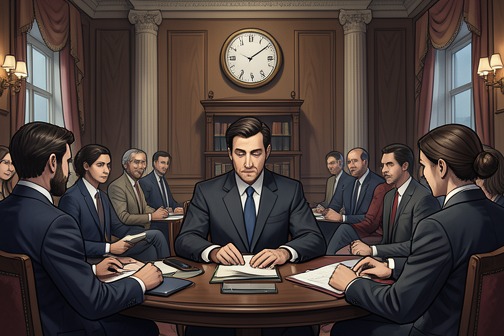
[Rudy Baylor](entity:character-recall-character-rudy-baylor-3da7e073af66)’s passage of the [Tennessee](entity:location-recall-location-80f50cef7ee1) bar exam converts years of legal study into professional standing, but the moment arrives not as a solitary triumph. It unfolds through anxious competition, a month of suspense, and an exuberant announcement by [Miss Birdie](entity:character-recall-character-miss-birdie-34b195a54978). The result also sharpens the contrast between Rudy’s achievement and the failures of people close to him, while his later work in court shows what the credential enables—and what it cannot supply: experience.
## The Examination
On Wednesday morning, Rudy joins roughly two hundred candidates in a hotel ballroom. At least half have just graduated from [Memphis](entity:location-recall-location-memphis-43c9d5e0eed8) State, and among them are friends as well as rivals. Rudy and [Booker Kane](entity:character-recall-character-booker-kane-d1aae9f7ebbd) deliberately sit apart. [Sara Plankmore](entity:character-recall-character-sara-plankmore-fc2e0e511202) Wilcox and her new husband, S. Todd Wilcox, sit on the other side of the room. The atmosphere recalls the competitive vigilance of law school: each candidate silently hopes that others will falter, knowing they may be wishing the same in return.
The examination begins at exactly eight o’clock with the Multi-State section, a long sequence of difficult multiple-choice questions on law common to all states. Rudy cannot tell how well prepared he is. Lunch with [Booker](entity:character-recall-character-booker-de6b30c46e06) passes without discussion of the test; after the day’s work, Rudy eats dinner with Miss Birdie and goes to bed early. The exam continues until five o’clock Friday afternoon. When the papers are collected, the candidates are too exhausted for a celebration. Some meet later at [Yogi’s](entity:location-recall-location-yogi-s-163094a4b41b) for pizza and beer, but no one wants to compare answers: the graduates have learned that reviewing what they missed only makes the aftermath worse. Booker tells Rudy that the exam has made him physically ill and that he thinks he failed.
## The Letter and the Announcement
The [Tennessee Board of Law Examiners](entity:organization-recall-organization-tennessee-board-fc1dc57561a9) sends results by certified mail. Rudy has chosen his home address so no one at [Bruiser Stone](entity:character-recall-character-bruiser-stone-a59658d034f9)’s office will open the letter first. Thirty days pass without news. On the thirty-first day, a Saturday, Miss Birdie gets Rudy out of bed with breakfast and a chore: painting the garage beneath his apartment. He works through the day, expecting no particular interruption.
That evening, after the painting is done, Miss Birdie serves a vegetarian pizza she has made for the first time. The two eat in the den and watch old films. During the second movie, she suddenly remembers something, hurries to search through papers in the kitchen, and returns holding Rudy’s result. The white sheet bears the Board’s congratulations: he has passed.
Miss Birdie had accepted the certified letter from the mail carrier while Rudy was painting, then opened it herself. Rudy’s first reaction is irritation at the invasion of his privacy; he believes she should have told him and should not have opened his mail. But her delight, and the tears in her eyes, quickly displace his anger. The news brings him immediate relief and elation. Miss Birdie proposes a celebration and brings out a bottle of melon brandy she has saved for a special occasion. They drink it from coffee cups, making the formal professional milestone a domestic celebration shared between landlady and tenant.
## A Result Shared Unevenly
Rudy later examines the official alphabetical list of candidates who passed, checking it carefully to make sure his name is really there and that no clerical mistake has occurred. It confirms Miss Birdie’s news. The list also makes the result’s costs plain: Booker Kane’s name is absent. Rudy imagines his proud friend trying to present the failure as temporary to his family and dreading his return to the office. He wants to comfort Booker but believes that Booker would not welcome it. Rudy expects that Booker will call the next day to congratulate him and promise to do better on another attempt.
Sara Plankmore’s name is absent as well, whether under her former name or her married name, while S. Todd Wilcox has passed. Rudy recognizes the unkindness of his pleasure at this reversal: he laughs at Sara’s failure, then acknowledges to himself that the reaction is spiteful and childish. The exam’s outcome therefore brings more than a clean division between pass and fail. It tests old rivalries and friendships, and Rudy’s private satisfaction sits beside his concern for Booker.
## From Graduate to Courtroom Advocate
Bruiser Stone congratulates Rudy on passing and notes that he, too, passed on his first attempt. The credential matters in the immediate setting of Rudy’s work: Bruiser tells him to be ready to handle some of the argument in an upcoming court appearance. Passing has not made Rudy an experienced lawyer, but it places him in a position to take part professionally rather than remain only a recent graduate.
That difference becomes visible in the Black family’s trial against Great Benefit. Rudy speaks in court, objects when Leo Drummond argues beyond the proper scope of an opening statement, and receives a sustained ruling from Judge Kipler. Later, in summation, Rudy does not pretend to possess the polish of a veteran advocate. He recognizes that he is a rookie, nervous and without a long history of courtroom battles, and shapes his appeal accordingly: he speaks directly to the jurors about what the case means to his clients. The bar result is thus a threshold, not a guarantee of mastery. It qualifies Rudy to practice; the courtroom still requires him to learn by acting.
## Significance
The passage is presented as both an individual achievement and a turning point in Rudy’s working life. Its suspense comes from the contrast between the impersonal machinery of the exam—a ballroom, folding tables, timed sections, certified mail—and the intimate circumstances in which the result reaches him: a painted garage, a homemade dinner, and Miss Birdie’s unexpected announcement. The same list that confirms Rudy’s success also records the absence of Booker and Sara, making professional qualification a shared but unequal outcome.
Rudy’s later performance in court gives the result its practical consequence without erasing the distance between passing a test and becoming seasoned. He can now stand before a judge and jury as counsel, yet remains conscious of his inexperience. The exam closes one chapter of training and opens another, where competence must be demonstrated in arguments, testimony, and decisions that affect clients’ lives.
Event 12
Great Benefit denies Donny Ray Black’s transplant claim

Great Benefit’s denial of [Donny Ray Black](entity:character-recall-character-donny-ray-black-d0072c3fb976)’s bone marrow transplant claim is the central injury behind the Black family’s lawsuit: a dispute over whether the policy covered treatment that, according to the plaintiffs’ case, could have saved his life. What first appears in court as an argument about coverage and household status becomes a record of repeated, inconsistent refusals—and of the human cost of leaving a seriously ill young man without the care his family believed the policy promised.
## The Coverage Dispute
Great Benefit’s defense is that the policy did not cover bone marrow transplants. At the first hearing, [Leo F. Drummond](entity:character-recall-character-leo-f-drummond-316f9ae6a846) also argues that Donny Ray should not be covered because he was an adult and no longer a member of his parents’ household. Those arguments put policy wording and eligibility at the center of the dispute, while the family faces the immediate question of how to obtain treatment.
The policy’s language gives the coverage argument a consequential gap. It excludes transplants for organs that can be transplanted but does not mention bone marrow. A newer policy later obtained by [Rudy Baylor](entity:character-recall-character-rudy-baylor-3da7e073af66) includes an express exclusion for bone marrow transplants, sharpening the contrast between the document Great Benefit issued to the Blacks and the language the company subsequently used. Drummond nevertheless insists that the treatment is not covered; the defense also portrays bone marrow transplantation as unreliable and experimental rather than an accepted treatment for acute leukemia.
## A Record of Repeated Denials
The claim is not refused once on a single, stable ground. [Dot Black](entity:character-recall-character-dot-black-b1b1af2d4e7c) receives seven denial letters, each advancing or referring the claim elsewhere: some reject it outright, others send it between claims and underwriting, and still others cite a preexisting condition, Donny Ray’s adult status, or the asserted lack of transplant coverage. The sequence makes the company’s response appear less like a clear explanation of one policy term than a succession of obstacles.
The next letter declares that the claim has been denied for the eighth and final time and insults Dot. Rudy has her present the letter during her deposition without warning Drummond about its contents. Drummond’s reaction—his surprise as he reads it and looks toward Rudy and [Tyrone Kipler](entity:character-recall-character-tyrone-kipler-cddd2f3e2d3c)—shows that he has not seen it before. Kipler stops the deposition and warns that he will sanction Great Benefit and its lawyer if the company conceals further documents. The letter thus changes the dispute: it is evidence not only of how the claim was treated, but also of information Great Benefit failed to give its own defense counsel.
## The Denial’s Human Consequences
Rudy sees the claim against the setting of Donny Ray’s illness and the family’s repeated efforts to find help. During Dot’s testimony, she describes writing and calling Great Benefit, contacting elected officials, asking local hospitals for free care, and trying with friends and neighbors to raise the money. The attempts fail. She identifies the policy and explains how the family bought it through weekly premium collections, connecting the disputed contract to the family’s ordinary efforts to secure protection.
Donny Ray’s recorded deposition makes the consequence of the denial present in the courtroom. Edited to thirty-one minutes, it allows the jurors to hear his weak testimony and see his face on a screen; Dot wipes her cheeks, and the courtroom remains quiet after the recording ends. The insurance dispute is no longer only a disagreement about the meaning of a clause. The jury has seen the person whose treatment was at stake and heard the family’s account of trying, without success, to obtain care.
## From Claim Dispute to Trial Case
At trial, Dot reads the seven earlier denial letters to the jury, then reads The Stupid Letter twice after Drummond objects and Kipler overrules him. The repetition gives the jury time to register the letter’s tone and place it alongside the changing reasons in the earlier correspondence. Drummond’s cross-examination tests whether Dot had specifically sought coverage for bone marrow transplants; she explains that she wanted full coverage and had not been thinking about a treatment she had never needed.
Rudy’s closing argument connects the policy, the medical evidence, the denial record, and Great Benefit’s conduct. He points out that the defense has offered no evidence contradicting [Dr. Walter Kord](entity:character-recall-character-dr-walter-kord-ab3c830078f9)’s testimony that transplantation was not experimental and quite possibly would have saved Donny Ray. He also argues that Great Benefit’s denials were part of a deliberate, year-long effort to reject legitimate claims, using company figures and testimony from Jackie Lemanczyk to make the pattern intelligible to the jury. The refusal to pay is therefore presented as both the immediate cause of the family’s legal fight and a revealing instance of a larger corporate practice.
The denial’s decisive significance lies in the contrast between the promise the Black family believed it had purchased and the obstacles Great Benefit placed between Donny Ray and treatment. The letters supply the documentary chain; Dot and Donny Ray supply the family’s experience of it. Together, they turn a contested policy interpretation into a case about what repeated refusal means when time and health cannot be restored.
Event 13
Rudy Baylor passes the bar exam
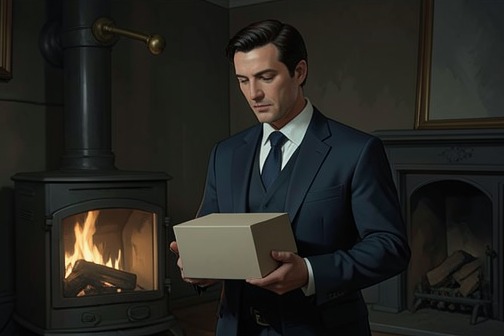
[Rudy Baylor](entity:character-recall-character-rudy-baylor-3da7e073af66)’s bar-exam success marks the turn from law student to aspiring advocate, but it does not immediately grant him the right to practice. The result appears in a terse newspaper notice; its practical consequence arrives when he must stand alone in court and face an objection that he is not yet licensed.
## The Result Appears in Print
The news reaches Rudy in the business section of a Sunday newspaper, in a short item headed “161 PASS BAR EXAM.” It is the third story to catch his attention: the paper has spent days covering the paddle-wheel disaster, in which forty-one children died, and also carries an installment about police corruption that names [Bruiser Stone](entity:character-recall-character-bruiser-stone-a59658d034f9) as a likely federal target. Against that grim backdrop, the brief exam notice is a personal surprise.
The result matters to Rudy not just as a credential but as a possible opening in a crowded profession. He has spent three years in law school, while many graduates leave without jobs; he has also watched the legend of [Jonathan Lake](entity:character-recall-character-jonathan-lake-f5a17ac6e94d) inspire students to imagine building a practice of their own. Passing gives Rudy a reason to hope, though the notice itself says nothing about employment or the difficulty still ahead.
## Passing Is Not Admission
At the Black hearing, Rudy discovers the distinction between passing the bar examination and receiving a license. Bruiser Stone was expected to appear, but is absent when Rudy arrives at the [Shelby County Courthouse](entity:location-recall-location-8bc12bcc2e29). With the Black case at risk of proceeding without its expected lawyer, Rudy tells Judge [Harvey Hale](entity:character-recall-character-harvey-hale-97a30622f8c0) that he is prepared to argue the motion.
[Leo F. Drummond](entity:character-recall-character-leo-f-drummond-316f9ae6a846), representing Great Benefit Life, objects that Rudy has no license. Rudy answers that he has passed the exam and expects to take the oath the following week. The exchange makes the achievement’s limit plain: the exam has been passed, but formal admission remains pending. Drummond treats that gap as grounds to exclude him, and Rudy’s new status as a successful examinee cannot by itself settle the issue.
## A Credential Put to the Test
Rather than retreat, Rudy meets Drummond’s challenge directly. When Drummond dismisses the exam as insignificant, Rudy points to Shell Boykin, a student from their class who had been hired by [Trent & Brent](entity:organization-recall-organization-trent-brent-758f6b4e3f05) but did not pass. The remark is a deliberate and sharp counterattack, and Rudy notices the reaction at the defense table. The moment changes the scale of the confrontation for him: Drummond may be a celebrated trial lawyer, but he is still a man across the courtroom aisle.
The exchange turns the exam result from private good news into a public claim to professional standing. Rudy has not yet completed admission, but he refuses to let that temporary deficiency erase the work represented by passing. He proceeds as a novice facing an experienced opponent, with the Black case and his own legitimacy before the court both at stake.
## From Exam Success to Licensed Practice
By the time Rudy later tries the Black case before Judge [Tyrone Kipler](entity:character-recall-character-tyrone-kipler-cddd2f3e2d3c), he has held his law license for less than a month. He faces a crowded Great Benefit legal team alone at counsel table, while his own staff has failed the bar exam six times. The contrast underscores how far the result has carried him: the newspaper notice becomes the beginning of a short transition from student to licensed lawyer responsible for a major trial.
The exam does not guarantee success in practice or erase Rudy’s inexperience. It gives him entry into the profession, while the courtroom episodes show what that entry demands: judgment, nerve, and the ability to act before he feels fully prepared. His first stand against Drummond makes the credential consequential not because it instantly confers authority, but because Rudy is willing to defend his place in court while formal admission is still days away.
Event 14
Rudy Baylor and Deck Shifflet establish their law firm
[Rudy Baylor](entity:character-recall-character-rudy-baylor-3da7e073af66) and [Deck Shifflet](entity:character-recall-character-deck-shifflet-d9acaca8aa29) establish their own law firm on a shoestring, while the firm they have left is under federal scrutiny. The venture begins with a one-year arrangement, secondhand furnishings, and more expenses than income; it soon gives Rudy a workplace from which to carry the Black family’s insurance case into court. Its early contrast—small practice, immense corporate opponent—becomes central to the episode’s significance.
## Decision and Circumstances
With federal agents watching their former office, Rudy and [Deck](entity:character-recall-character-deck-b3382237668e) remove files and prepare to leave. They are not certain what will happen next: Deck has been unable to reach [Bruiser Stone](entity:character-recall-character-bruiser-stone-a59658d034f9), and the two men are wary of surveillance. Against that unsettled background, Rudy proposes that he and Deck try working together for a year, with a thirty-day walkout clause if either becomes dissatisfied. Deck eagerly shakes his hand. Rudy is more cautious, hoping to build a steady practice by serving clients and encouraging Deck to study for the bar, rather than letting the firm become an extension of Deck’s habit of chasing accident cases.
The partnership also has an important professional imbalance. Rudy is the lawyer; Deck, whom the new stationery identifies as a paralegal, is not licensed. Rudy intends to run the practice responsibly and gradually encourage Deck to take the profession more seriously. The plan is an aspiration rather than a settled transformation: Deck has already spent a week quietly removing belongings from the old office, and the new firm begins while their former employer’s troubles are unfolding.
## The New Office
Deck finds four rooms totaling about a thousand square feet above Buried Treasures, an antique shop in a neighborhood where several buildings remain boarded up or burned out. The space has hardwood floors and twelve-foot ceilings. Rudy’s office is about fifteen feet square, with a window facing the street; another room is meant for conferences, and the front room could serve as reception or later accommodate a secretary. Deck is intent on making the space workable, pointing out where paint is needed and proposing a restrained shade of white to keep costs down.
The landlord, an antique dealer downstairs, offers tables, chairs, lamps, and filing cabinets on monthly payments. The arrangement makes furnishing the office possible without a large initial outlay, though Deck notes that the building has been robbed before. He has already visited a printer and brought back stationery designs: Rudy’s name appears prominently, while Deck’s is listed in the corner as a paralegal. They consider ordering five hundred sheets and envelopes, installing a phone line, and putting off a copier and fax machine. Deck proposes an answering machine costing about eighty dollars and a First Trust bank account with free checks and interest on the balance. The office is being assembled one practical decision at a time.
## First-Month Finances and Work
The first month produces only $1,200 in fees: $400 from a shoplifting matter Deck brought in, $200 from a DUI case, $500 from a workers’ compensation file taken from Bruiser Stone’s office as they left, and $100 for wills Rudy prepared for a couple who wandered upstairs from the antique shop. Rudy records the payment for the wills as his first ethically earned fee. The modest total makes clear how little room the fledgling practice has for error.
Start-up expenses reach $4,250. They include $500 in rent, $400 for stationery and business cards, about $550 for utility connections and deposits, $800 for a leased phone system and its first bill, $300 for the first installment on furnishings, $200 in bar dues, $300 in miscellaneous costs, $750 for a fax machine, $400 for a basic computer setup and first month’s rent, and $50 for a restaurant-guide advertisement. Deck calculates the figures to the penny and estimates continuing monthly overhead at roughly $1,900 once the initial costs have passed. The business has spent more than three times what it has collected in its first month.
Deck tries to make himself useful in nearly every routine task: he handles typing, answers the phone, gets coffee, sweeps, and takes copying to the printer. He lives at the office and is eager to help Rudy, but does not study for the bar exam and changes the subject when they discuss it. His energy keeps the practice functioning; Rudy’s effort to shape that energy into a more conventional legal partnership remains unresolved.
## A Base for the Black Case
The new firm’s importance quickly exceeds its limited premises and first-month accounts. Rudy’s work on the Black family’s claim concerns a form of low-cost, door-to-door insurance sold to lower-income customers. [Max Leuberg](entity:character-recall-character-max-leuberg-34913c102c9e) explains that only a small share of bad-faith denials reach court, in part because policyholders may be wary of lawyers and the legal system. He also warns that [Tennessee](entity:location-recall-location-80f50cef7ee1) juries are conservative about punitive damages, making a claim against a wealthy insurer difficult even when the policyholder’s medical costs are covered. The case therefore places the new practice in a struggle between a family with a serious loss and a corporation with far greater resources.
As the litigation advances, Rudy uses the firm’s work to expose the insurer’s procedures and the evidence it withheld. In testimony, [Jackie Lemancyzk](entity:character-recall-character-jackie-lemancyzk-ed51dd48f713) describes a 1991 policy of initially denying claims above $1,000 for a year, regardless of their legitimacy, and says the plan generated about $40 million. Rudy later produces the complete [Section U](entity:expression-recall-expression-section-u-f7e7331ad1e1) material after a company executive confirms that the section was removed from the manual provided to him. [Donny Ray Black](entity:character-recall-character-donny-ray-black-d0072c3fb976)’s recorded testimony, shown to the jury on a twenty-inch screen, makes the consequences of the dispute immediate and personal.
In closing, Rudy sets the company’s available cash, reserves, and undistributed surpluses at $475 million, alongside an admitted net worth of $450 million, and argues that punitive damages must be large enough to affect a corporation of that scale. The firm’s founding does not guarantee financial stability—the first month shows the opposite—but it gives Rudy an independent place from which to bring the case forward. The small office above the antique shop becomes the starting point for a courtroom challenge to a claims-denial system that depended on many policyholders never obtaining legal help.
Event 15
Federal authorities raid Bruiser Stone’s office and indict his associates
The raid on [Bruiser Stone](entity:character-recall-character-bruiser-stone-a59658d034f9)’s offices turns a day of uncertainty into a public federal case. Agents take control of the firm’s premises, and indictments alleging more than a hundred counts follow. The investigation reaches businesses associated with Stone and [Prince Thomas](entity:character-recall-character-prince-thomas-9490c826dc2b), while the two men evade the authorities and leave [Rudy Baylor](entity:character-recall-character-rudy-baylor-3da7e073af66) and his former colleagues unsure what will happen next.
## The Raid and Its Immediate Aftermath
Just after midnight, federal agents raid the offices where Rudy had worked. By the next morning, the premises are locked under court order. Employees may enter and leave, but they are not permitted to remove anything. The previous day, uncertainty had already spread through the office: Stone and Thomas could not be found, and colleagues compared their last contacts with Stone, trying to determine whether anything had signaled trouble. The fear that the office might be monitored adds to their caution. Rudy and [Deck Shifflet](entity:character-recall-character-deck-shifflet-d9acaca8aa29) eventually leave through a rear door for lunch; neither will return to the building.
At 3:20 a.m., [Deck](entity:character-recall-character-deck-b3382237668e) calls Rudy with news of the raid and Stone’s departure from town. Thomas has vanished as well. Deck reports that agents are likely to want to speak with everyone who worked at the firm. Later, when the noon news report shows agents guarding the former office, the raid becomes a visible seizure rather than a rumor. The broadcast says staff can still enter but cannot take property away.
## Indictments and Seized Businesses
The indictments arrive after sunrise. A television report announces more than a hundred counts against Stone, Thomas, Willie McSwane, and others. The allegations concern three clubs, including Vixens, which federal agents have also seized. The report shows arrests of policemen and footage connected with another topless club, while the U.S. Attorney publicly announces the indictments. Arrest warrants have been issued, but neither Stone nor Thomas is in custody; an agent says investigators believe the men have fled the area.
The seizure extends to [Yogi’s](entity:location-recall-location-yogi-s-163094a4b41b), which the report identifies as Thomas’s headquarters. Its doors are chained, guards are posted outside, and agents have found no cash there. The arrest of the business’s ordinary operations and the empty-handed search give the coverage a sharper edge: Thomas is presented as a powerful local figure, yet his premises are now under federal control and he is gone.
## Flight and Consequences
The raid changes the status of Stone’s firm at once. Rudy and Deck have established new offices, but some of Deck’s files came from work Stone had assigned him, including an insurance matter that remained in Deck’s office. Rudy suspects there may be other files in the box that Deck removed from the old office, though he does not ask about them. They both worry that investigators will question them, even as Deck says they know nothing and took no files that would interest the authorities.
The news also gives the case a second, unresolved thread: Stone and Thomas are not merely subjects of indictments but men who have disappeared before the warrants can be served. Rudy’s concern for Thomas persists despite the rumors surrounding his cash and businesses; he regards him as a friend and hopes he remains safe. The episode therefore closes not with arrests or explanations, but with a seized office, a watched restaurant, and the two central figures still beyond reach.
Event 16
Rudy faces Drummond alone in court for the first time in the Black case
[Rudy Baylor](entity:character-recall-character-rudy-baylor-3da7e073af66)’s first solo appearance against [Leo F. Drummond](entity:character-recall-character-leo-f-drummond-316f9ae6a846) in the Black case begins as a test of credentials and nerve, then becomes a lesson in how legal procedure and settlement economics can work together. [Bruiser Stone](entity:character-recall-character-bruiser-stone-a59658d034f9) is missing; Rudy has passed the bar but has not yet received his license; and the judge appears ready to dismiss the case. Yet Rudy insists that the matter is his to handle, while Drummond’s firm quietly puts a $75,000 offer on the table. The hearing marks the moment Rudy stops imagining himself as an apprentice watching a great trial lawyer and begins acting as the advocate responsible for the Black family’s claim.
## Background and Stakes
Before the hearing, [Max Leuberg](entity:character-recall-character-max-leuberg-34913c102c9e) explains why the Black case matters beyond its individual medical bills. Great Benefit sells debit insurance—cheap policies marketed door to door to low-income customers, with premiums collected regularly by agents. Leuberg says companies routinely deny claims and rely on the fact that only a small fraction of bad-faith denials reach court. In his account, policyholders are often people who fear lawyers and the legal system, and the insurer’s financial advantage makes a meaningful punitive award difficult to obtain.
The Black claim carries an especially stark human stake: [Donny Ray Black](entity:character-recall-character-donny-ray-black-d0072c3fb976) is dying, and his family says the policy covers the bone marrow transplant that could save him. Leuberg calls it a good case, but warns Rudy that [Tennessee](entity:location-recall-location-80f50cef7ee1) juries are conservative and that [Memphis](entity:location-recall-location-memphis-43c9d5e0eed8) is a difficult place to secure a substantial verdict. The hearing therefore begins under two pressures at once: Great Benefit disputes its obligation to pay, while Rudy must confront the possibility that even a valid claim may not yield a meaningful remedy.
## Rudy Takes the Case
At the [Shelby County Courthouse](entity:location-recall-location-8bc12bcc2e29), in [Circuit Court Division Eight](entity:organization-recall-organization-a5e7a7111c14), Rudy finds Judge [Harvey Hale](entity:character-recall-character-harvey-hale-97a30622f8c0) on the bench and Great Benefit’s lawyers waiting. Bruiser is nowhere to be seen. Rudy walks to the bar and identifies himself as working for Bruiser Stone, but when Hale asks whether he wants a continuance, Rudy says he is prepared to argue the motion.
Hale asks whether Rudy is a lawyer. Rudy has passed the bar exam, but his oath—and the license that will follow—are still a week away. Drummond, appearing for [Tinley Britt](entity:organization-recall-organization-tinley-britt-5d779a949a08), objects to Rudy’s appearance on that ground. Rudy answers that he has passed the examination, then punctures Drummond’s air of authority by pointing out that a student at a prestigious firm failed it. The exchange is a cheap shot, but it changes Rudy’s sense of the encounter: the celebrated opponent is not an untouchable figure, but a man on the other side of the aisle.
Hale allows the hearing to proceed. Rudy says he will handle the case and explains that Bruiser filed it on his behalf before he passed the bar. The judge gives each side fifteen minutes to argue Great Benefit’s motion to dismiss. Drummond’s central position is that the policy excludes bone marrow transplants and that Donny Ray, as an adult no longer living in the household, is not covered. His argument runs well beyond the allotted time; Rudy then offers a shorter account focused on the dispute between the parties and the treatment Great Benefit has denied.
## The Hearing and Its Reversal
The contrast between the two presentations is also a contrast in legal resources. Drummond argues at length while three associates take notes, and Rudy sees a defense team able to devote expensive labor to repeating and refining its position. [Deck Shifflet](entity:character-recall-character-deck-shifflet-d9acaca8aa29) passes Rudy a note urging him to follow his brief and keep his argument short. Rudy does so, but the judge seems bored with both sides and returns to his reading.
After Drummond’s rebuttal, Hale calls the lawyers into chambers. There he tells Rudy that he is not impressed with the merits of the lawsuit and is inclined to grant the motion to dismiss. He suggests that Rudy could refile in federal court, explaining that he does not want the case clogging his docket. The prospect is immediate: the Black family’s claim may be stopped before trial, not because the dispute has been fully tested, but because the judge wants it elsewhere.
While Hale briefly leaves the room, Drummond privately explains the cost Great Benefit expects to incur defending the case through trial: between $50,000 and $75,000. The company has authorized him to offer $75,000 to settle. Drummond presents the proposal as economical and confidential, with a short deadline and no admission of liability. The sequence makes the offer’s logic plain: Great Benefit would rather pay a controlled amount now than risk the costs, publicity, and uncertainty of a trial.
When Hale returns, he says that settlement discussions are part of his approach to moving cases along. Rudy tells him that Drummond has offered $75,000—the estimated cost of defending the suit. Hale reacts with apparent surprise. The hearing thus shifts from a threatened dismissal to a negotiation in which the judge and the defense lawyer have each played a role, though the account does not establish that the judge knew the amount before Rudy disclosed it.
## Significance in the Larger Case
The immediate contest is about whether Rudy can appear and whether the lawsuit can survive a motion to dismiss. Its deeper tension is between the value of the claim to the Black family and the price Great Benefit assigns to ending the dispute. The $75,000 offer is substantial as a settlement, but it also resembles the defense costs it is designed to avoid; it does not establish liability or resolve the underlying allegation that the policy covers Donny Ray’s treatment.
Later evidence in the case gives this first hearing an added significance. Great Benefit’s claims and underwriting manuals contain matching [Section U](entity:expression-recall-expression-section-u-f7e7331ad1e1) procedures for denying claims and sending files between departments, while [Jackie Lemancyzk](entity:character-recall-character-jackie-lemancyzk-ed51dd48f713) testifies that the company denied every claim over $1,000 during a twelve-month experiment and that the scheme produced roughly $40 million. That later record reframes the early motion as one phase of a much larger conflict: the claim that looked to the defense like an expensive lawsuit was eventually connected to a deliberate company-wide denial policy. At this first appearance, however, Rudy has not yet made that case. He has only secured the chance to keep speaking for the Black family—and learned that the courtroom is not made more level by the fact that the opposing side has more lawyers.
Event 17
The Black family rejects Great Benefit’s $75,000 settlement offer
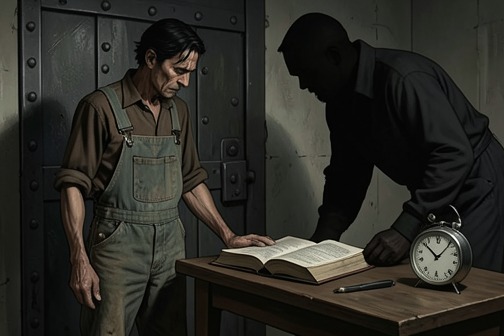
The Black family rejects [Great Benefit Life Insurance Company](entity:organization-recall-organization-great-benefit-li-1b1fecc4c37d)’s $75,000 settlement offer while [Donny Ray Black](entity:character-recall-character-donny-ray-black-d0072c3fb976) is nearing the end of his life without the bone marrow transplant his family believes his policy should have covered. The choice pits an immediate sum of money against a chance to expose the insurer’s denials. For [Rudy Baylor](entity:character-recall-character-rudy-baylor-3da7e073af66), it is also a test of whether he will put his clients’ interests ahead of a fee that would transform his own finances.
## The Offer and Its Leverage
The proposal follows a preliminary hearing at which Judge [Harvey Hale](entity:character-recall-character-harvey-hale-97a30622f8c0) indicates that he is inclined to dismiss the case. Great Benefit Life Insurance Company’s lawyer, [Leo F. Drummond](entity:character-recall-character-leo-f-drummond-316f9ae6a846), presents the offer as an economic calculation: he says defending the lawsuit through trial would cost the company between $50,000 and $75,000, and the insurer authorizes him to offer $75,000 to settle. The offer carries no admission of liability and is available for only 48 hours. Drummond describes the settlement as a way to avoid litigation costs, executive depositions, publicity, and the possibility of an unpredictable verdict.
The offer draws on a wider imbalance between insurers and low-income policyholders. [Max Leuberg](entity:character-recall-character-max-leuberg-34913c102c9e) has explained that these inexpensive, door-to-door policies are collected in weekly payments and that companies often deny claims on shifting grounds. He estimates that only about one in thirty bad-faith denials reaches court, in part because people with limited means may fear lawyers and the legal system. He also cautions that juries can be reluctant to award large punitive damages against wealthy companies. The settlement therefore offers the Blacks money now, while asking them to abandon a case whose success is uncertain.
## The Family Weighs the Money
When Rudy tells [Dot Black](entity:character-recall-character-dot-black-b1b1af2d4e7c) that Great Benefit Life Insurance Company has offered $75,000, she understands it as an attempt to buy off the family. The offer comes too late to secure the transplant Donny Ray needed the previous year. With Donny Ray fading fast, Dot rejects the idea that the money could compensate for what has already been lost. She makes clear that she wants the company held accountable, not simply paid off.
Rudy takes the question to Donny Ray, who asks whether the insurer might offer more and how much Rudy’s fee would be. Rudy explains that his contract entitles him to a third of any recovery. Donny Ray calculates that the remainder would leave $50,000 for his parents, enough in his view to pay off their house, replace their car, and set money aside for old age. Dot still does not want Great Benefit’s money. Donny Ray later asks Rudy directly whether he wants to settle, acknowledging that some of the funds would go to the lawyer. Rudy says he does not: he wants to expose the company.
The decision confronts Rudy with a personal temptation. A settlement would produce a $25,000 fee, an amount he can scarcely comprehend at this point in his career. He recognizes how easily he could persuade the family to accept by emphasizing Hale’s apparent readiness to dismiss the case and the risk that the offer would disappear. Instead, he holds to his duty to advise the clients in their best interests and leaves the choice with them. The refusal is the Blacks’ decision, not a lawyer’s unilateral rejection of money on their behalf.
## Refusal and the Case’s Continuation
The next morning, Rudy confirms to Drummond that his clients will not accept the offer. Drummond warns that the case will now become a fight but does not increase the amount. The situation changes when Hale dies before signing an order dismissing the lawsuit. Rudy checks the court file and learns that the case remains alive, though the threat that it might be dismissed had shaped the settlement decision.
The family’s refusal carries forward into the trial. Dot testifies about her efforts to obtain care for her son and reads the insurer’s successive denial letters to the jury, including the insulting letter that becomes a focal point of the case. Later testimony describes Great Benefit’s 1991 policy of initially denying claims over $1,000 for a year, regardless of their legitimacy; [Jackie Lemancyzk](entity:character-recall-character-jackie-lemancyzk-ed51dd48f713) says the scheme generated roughly $40 million. At trial, Rudy also exposes [Section U](entity:expression-recall-expression-section-u-f7e7331ad1e1) in the claims and underwriting manuals, which directed the two departments to pass files between them while withholding payment. Donny Ray’s recorded testimony, edited to 31 minutes, gives the jurors a direct account of the person behind the claim.
In closing, Rudy sets the company’s financial scale against the harm described in court. Using Great Benefit’s figures, he writes $475 million in available cash, reserves, and undistributed surpluses on the board, alongside an admitted net worth of $450 million. Drummond, by contrast, frames $200,000—the stated cost of the transplant—as a practical sum that could improve Dot and [Buddy Black](entity:character-recall-character-buddy-black-cad147c0d4fb)’s income. Rudy answers that the question is not merely what money could be useful to the family, but whether the company’s conduct warrants punishment. The earlier $75,000 offer thus marks the point at which the Blacks decline a private resolution and pursue a public judgment on the insurer’s practices.
## Significance
The rejection is not a guarantee of victory or compensation; it is a choice made under pressure, with Donny Ray’s treatment already out of reach and the case’s legal future uncertain. Its force lies in the contrast between the insurer’s calculation of defense costs and the family’s account of an irreversible loss. For Rudy, refusing to exploit that uncertainty for a fee becomes part of the case itself: the clients’ consent governs settlement, and the claim proceeds because the family values exposure and accountability over the offered sum.
Event 18
Harvey Hale dies

[Harvey Hale dies](entity:event-recall-event-harvey-hale-d1058d5749bd) suddenly of a heart attack by his swimming pool, an event that leaves a vacancy on the circuit court and changes the immediate prospects of [Rudy Baylor](entity:character-recall-character-rudy-baylor-3da7e073af66)’s case against Great Benefit. Because Hale had been inclined to dismiss the Black family’s lawsuit but had not signed an order, his death leaves the case alive for a new judge to consider.
## The Judge and the Pending Case
Before his death, Hale had heard arguments on Great Benefit’s motion to dismiss. Rudy’s account of the hearing records Hale’s skepticism about the lawsuit and his reluctance to let it continue in his court; he suggested that Rudy could refile in federal court rather than leave the case on his docket. The judge’s apparent inclination to dismiss made the case’s status precarious, but his view had not yet become a signed ruling.
## Death and Immediate News
[Deck Shifflet](entity:character-recall-character-deck-shifflet-d9acaca8aa29) tells Rudy the news early one morning: Hale, sixty-two and on the bench for eleven years, has died after a heart attack by his swimming pool. The newspaper gives the death prominent coverage, including an obituary photograph and reflections from colleagues. One of those quoted in the article is [Leo F. Drummond](entity:character-recall-character-leo-f-drummond-316f9ae6a846), Hale’s friend and former roommate, linking the judge’s death to the opposing lawyer who had argued for dismissal.
At nine o’clock, Rudy checks the Black v. Great Benefit file in the circuit clerk’s office. Hale did not sign an order dismissing it before his death, so the lawsuit remains active. The discovery is a concrete reprieve, not a ruling on the merits: the case survives because the judge’s decision was still unfinished.
## The Vacancy and Its Consequences
The vacancy sets off speculation about Hale’s replacement. The newspaper notes that Shelby County is evenly divided between Black and white residents while only seven of its nineteen circuit judges are Black, and that a prior effort to appoint a Black judge to a vacancy had failed. [Tyrone Kipler](entity:character-recall-character-tyrone-kipler-cddd2f3e2d3c), a Harvard-educated partner at [Booker Kane](entity:character-recall-character-booker-kane-d1aae9f7ebbd)’s firm, had been a leading candidate in that earlier contest. After Hale’s death, the mayor and other local leaders press for Kipler, and the governor appoints him to serve until the next regular election.
The change in judges alters the case’s pace as well as its immediate survival. Rudy asks Kipler to fast-track the lawsuit, and Kipler sets a schedule allowing four months for discovery before trial. Under Hale, the case had faced a possible dismissal; under his successor, it moves toward a prompt jury decision. Hale’s death thus functions as a turning point in the litigation, though the new judge’s appointment—not the death alone—determines what happens next.
Event 19
Tyrone Kipler is appointed judge
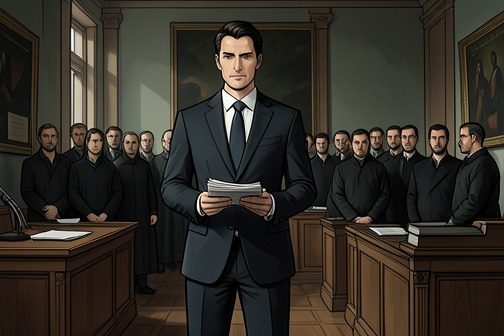
[Tyrone Kipler](entity:character-recall-character-tyrone-kipler-cddd2f3e2d3c)’s appointment as a circuit judge changes the course of [Rudy Baylor](entity:character-recall-character-rudy-baylor-3da7e073af66)’s case against [Great Benefit Life Insurance Company](entity:organization-recall-organization-great-benefit-li-1b1fecc4c37d). Selected after [Harvey Hale](entity:character-recall-character-harvey-hale-97a30622f8c0)’s death, Kipler inherits Hale’s docket and replaces a judge whom plaintiffs’ lawyers had learned to avoid with one ready to move cases forward. His arrival gives Rudy’s request for a speedy trial a receptive hearing—and turns the prospect of a distant courtroom contest into an immediate one.
## The vacancy and the choice
Harvey Hale’s death makes the judgeship vacant. A newspaper account identifies Kipler as the leading candidate: the previous year, he had been considered for another vacancy, and the mayor of [Memphis](entity:location-recall-location-memphis-43c9d5e0eed8) and other Black leaders were prepared to press for his appointment. Their advocacy takes place against a stark imbalance: Shelby County is about half Black and half white, but only seven of its nineteen circuit court judges are Black. A previous effort to appoint a Black judge had failed.
The governor’s decision also carries an apparent financial cost for Kipler. As a partner at [Booker](entity:character-recall-character-booker-de6b30c46e06)’s firm, he earns between $125,000 and $150,000 a year; the judgeship pays $90,000. He has a wife and children, while [Marvin Shankle](entity:character-recall-character-marvin-shankle-e58f97e1e935) wants him on the bench. Booker believes the appointment is all but certain after Kipler speaks with the governor, and the governor, a Democrat facing reelection, is expected to respond to the pressure this time. The account presents the selection as both a personal transition and a consequential public choice.
## A different approach to the docket
The day after the governor appoints him, Kipler meets Rudy in the office Harvey Hale had occupied. Hale’s books and mementos are being boxed, his shelves are bare, and the desk has been removed. The changed room accompanies a change in judicial priorities: Kipler has reviewed every active case and identified several for quick movement. Hale had left an unusually orderly docket, in part because he dismissed suits that offended his views on protecting insurers and large corporations. Kipler, by contrast, is looking for cases that can proceed.
Rudy wants the Black family’s case fast-tracked. He has explained the request to Booker, who carried it to Kipler. The procedure allows a judge to accelerate a case when the issues are clear and the facts sharply disputed, even if a defendant would prefer delay. Kipler tells Rudy to file a motion, anticipates that the defense will oppose it, and says he will hold a hearing. If the defense cannot persuade him otherwise, he plans to allow four months for discovery and then set a trial date.
Kipler’s proposal exposes the gap between Rudy’s confidence and his inexperience. Rudy has not yet taken a deposition and is unsure how many the case will require. Kipler warns that insurance companies often fail to provide all the documents a plaintiff is entitled to receive, and treats obtaining that evidence as part of the court’s work. Rudy reads his inclusive language as a sign that the judge may lean toward his side, though he also recognizes the judge’s role in ensuring access to pretrial evidence. The schedule feels frighteningly fast to him, but he tells Kipler they will be ready.
## The appointment in the courtroom
As the case proceeds, Kipler’s active presence becomes concrete. During the opening statements, he sustains Rudy’s objection when [Leo F. Drummond](entity:character-recall-character-leo-f-drummond-316f9ae6a846) argues that the Black family is greedy for seeking punitive damages. Kipler then calls for Rudy’s first witness, [Dot Black](entity:character-recall-character-dot-black-b1b1af2d4e7c). Later, after the jury hears Great Benefit’s denial letters and the company’s practices are exposed, Kipler presides as the plaintiff’s case reaches its culmination: [Donny Ray Black](entity:character-recall-character-donny-ray-black-d0072c3fb976)’s recorded deposition is played to the jurors, and Rudy rests his case.
The appointment therefore matters beyond filling a vacancy. Kipler’s decisions shape the pace and conditions of a trial that might have been harder to bring before a jury under Hale. At the end of the proceedings, Kipler gives the jury its final instructions. The path from an emptied judicial office to an active courtroom links political representation and judicial administration to Rudy’s effort to make Great Benefit answer for its handling of the Black family’s claim.
Event 20
Kipler orders an expedited schedule for the Black case
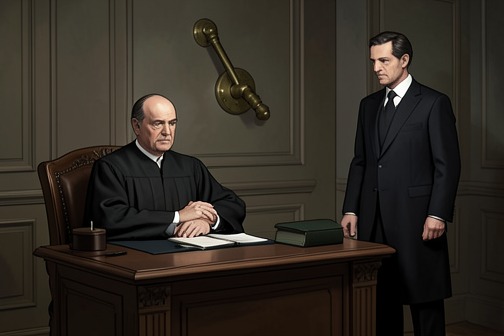
Judge [Tyrone Kipler](entity:character-recall-character-tyrone-kipler-cddd2f3e2d3c)’s decision to fast-track the Black family’s case against [Great Benefit Life Insurance Company](entity:organization-recall-organization-great-benefit-li-1b1fecc4c37d) turned procedural rules into a practical protection for a dying witness. Over the defense’s objections, Kipler imposed a 120-day discovery period and ordered an early deposition of [Donny Ray Black](entity:character-recall-character-donny-ray-black-d0072c3fb976), giving the case a route to trial while Donny Ray was still alive to provide testimony.
## Background and Request
The request arose from a broader effort to make civil litigation move faster. Recent procedural reforms had increased sanctions for frivolous suits, imposed deadlines for pretrial work, and given judges more authority to manage cases and encourage settlement. Fast-tracking allowed selected cases to reach trial sooner when their issues were clear, their facts sharply disputed, and a jury’s decision was the remaining need. Although parties could request it, defendants rarely welcomed the accelerated schedule; the judge could order it without their agreement.
The Black case was the only substantial matter [Rudy Baylor](entity:character-recall-character-rudy-baylor-3da7e073af66) had, and he wanted it moved quickly. He explained his request to [Booker Kane](entity:character-recall-character-booker-kane-d1aae9f7ebbd), who carried it to Kipler. The timing mattered: Donny Ray was gravely ill, and the case depended in part on preserving his account before he could no longer give it. When Kipler first discussed the proposal with Baylor, he anticipated that the defense would resist and that insurance-company document production could take time. He proposed four months for depositions, document exchanges, and written interrogatories, followed by a trial setting once discovery was complete.
## The Hearing and the Defense’s Resistance
Kipler’s appointment came after [Harvey Hale](entity:character-recall-character-harvey-hale-97a30622f8c0)’s death. Hale’s docket had been unusually sparse, in part because he was quick to dismiss plaintiffs’ suits when he believed they threatened insurers or large corporations. Baylor had not taken steps to avoid Hale when filing the Black case. With Kipler in office, however, the case came before a judge eager to move inactive litigation and willing to enforce the parties’ access to pretrial evidence.
At the hearing, [Leo F. Drummond](entity:character-recall-character-leo-f-drummond-316f9ae6a846) and the other Great Benefit lawyers opposed fast-tracking and sought to remove the case to federal court. Kipler questioned why the defense had not sought removal earlier, when Hale still presided, and rejected its explanation that it had only recently concluded that [Bobby Ott](entity:character-recall-character-bobby-ott-685fbe2edd34) had been included to defeat federal jurisdiction. Drummond then repeated points already set out in his brief. Kipler interrupted him and denied the removal request, keeping the case in the state court.
The dispute over acceleration exposed the weakness of the defense’s stated objection. When Kipler asked whether he had ever agreed to fast-track a lawsuit, defense lawyer T. Pierce Morehouse said that he had, but could not identify the case or court. Kipler directed him to provide those details by three that afternoon. He also made clear that fast-tracking was within the court’s discretion. The defense had five lawyers at the table, yet its claims of scheduling difficulty did not persuade the judge.
## Orders to Preserve Donny Ray’s Testimony
Kipler considered the request to expedite Donny Ray’s deposition alongside the fast-track motion. Baylor had submitted an affidavit from [Dr. Walter Kord](entity:character-recall-character-dr-walter-kord-ab3c830078f9) stating that Donny Ray would not live much longer. Drummond did not challenge the affidavit’s validity, but the defense initially framed its opposition as a scheduling problem and pointed to its lawyers’ crowded trial calendars.
Kipler rejected delay as a sufficient answer. He set Donny Ray’s deposition for Saturday the twenty-ninth, despite Drummond’s pending trial and Morehouse’s plan to be out of town for his sister’s wedding. Baylor was available at any time. Kipler noted that the defense had enough lawyers to manage the date even if one or two were absent. He then granted the fast-track motion: Great Benefit’s answer was due in seven days, discovery would begin then, and it would end 120 days from the order.
The orders joined two forms of acceleration. The broader schedule limited the time available for discovery disputes, while the deposition date addressed the immediate risk that Donny Ray might die before his testimony could be recorded. The ruling did not decide whether the insurer had wrongly denied coverage; it ensured that the disputed claim could proceed on a timetable that preserved evidence and brought the case closer to a jury.
## Consequences and Significance
The hearing also revealed how procedural control could alter the balance between a resourceful corporate defense and an inexperienced plaintiff’s lawyer. Drummond was a seasoned advocate, and Baylor recognized his own fear of facing him in court. Yet Kipler required the defense to answer the motions rather than rely on delay, and Baylor’s request benefited from the judge’s willingness to treat the preservation of testimony as urgent.
The later trial shows what the accelerated schedule made possible. Donny Ray’s deposition was edited into a 31-minute recording and played for the jury on a courtroom screen. The jury also heard [Dot Black](entity:character-recall-character-dot-black-b1b1af2d4e7c) read Great Benefit’s denial letters, including the insulting letter that became a focus of her testimony. In his closing argument, Baylor referred to the evidence about the insurer’s concealed documents and denial practices, and argued that the jury had heard no persuasive medical evidence against Dr. Kord’s account. The proceeding was a four-day trial, with the evidence and testimony still fresh when the lawyers addressed the jury.
Kipler’s order therefore mattered beyond its calendar dates. It moved the case out of the slow docket Baylor associated with Hale’s courtroom, constrained the defense’s opportunity to postpone key proceedings, and helped preserve Donny Ray’s own voice for the eventual trial. The court’s fast-track decision did not guarantee a verdict for the Black family, but it ensured that the merits could be heard before the central witness was lost.
Event 21
Donny Ray Black gives testimony at home
[Donny Ray Black gives testimony at home](entity:event-recall-event-donny-ray-black-55646515cead) is a deposition rearranged around a dying witness’s physical limits, and it becomes the means by which the jury can encounter him after he is gone. Held beneath an oak tree in the backyard of [Dot Black](entity:character-recall-character-dot-black-b1b1af2d4e7c) and [Buddy Black](entity:character-recall-character-buddy-black-cad147c0d4fb), the proceeding preserves Donny Ray’s account on video while testing whether [Rudy Baylor](entity:character-recall-character-rudy-baylor-3da7e073af66) can conduct a careful evidentiary examination under extraordinary circumstances.
## Causes and Arrangements
The deposition had originally been scheduled for Rudy Baylor and [Deck Shifflet](entity:character-recall-character-deck-shifflet-d9acaca8aa29)’s new office. On the Friday before it was due to take place, Dot Black told Rudy that Donny Ray was bedridden and could not leave home. The deposition itself had been worrying him and had left him weak. Rudy asked [Leo F. Drummond](entity:character-recall-character-leo-f-drummond-316f9ae6a846) to move it to the family’s house, but Drummond refused, insisting that the rules required postponement and a new notice. Rudy then contacted Judge [Tyrone Kipler](entity:character-recall-character-tyrone-kipler-cddd2f3e2d3c), who called Drummond and arranged for the deposition to proceed at the Blacks’ home the next day.
Kipler’s presence was unusual but purposeful. Donny Ray was gravely ill, and the deposition might be the only opportunity to record his testimony. Kipler also anticipated that disputes between counsel could interrupt the proceedings; with the judge present to rule on objections, he could prevent a procedural quarrel from derailing the examination. The change of venue thus addressed both Donny Ray’s condition and the risk that the testimony might otherwise be delayed beyond reach.
## The Backyard Deposition
The family’s home presented practical problems: the rooms were cramped, the lighting was poor for video, and the temperature was high. Kipler proposed the backyard instead. The group set up under an oak tree, using chairs from the house and an extension cord [Deck](entity:character-recall-character-deck-b3382237668e) had brought for the borrowed camera. Two court reporters arrived, and Drummond came with two other lawyers from [Trent & Brent](entity:organization-recall-organization-trent-brent-758f6b4e3f05). Dot and Rudy helped Donny Ray from his bed to a cushioned patio rocker. He was too weak to shake hands, but nodded to those present.
The video camera was placed about four feet from Donny Ray so the jury would see him, rather than the lawyers questioning him. Kipler sat beside Rudy and placed Drummond on Donny Ray’s other side; Dot watched from behind the camera. The deposition was also recorded stenographically, giving the parties a written reference without requiring them to review the entire video. The additional recording reflected the practical demands of litigation, while the video preserved the witness’s visible presence. Donny Ray’s testimony was expected to be needed at trial because he would likely be dead by then.
## Examination and Testimony
Rudy began with basic questions about Donny Ray’s name, address, birthdate, parents, and family. Donny Ray answered slowly and toward the camera, following the preparation they had done beforehand. Rudy then asked about his education and work, establishing that he had never left home, registered to vote, or been in trouble with the law. During the examination, Buddy Black briefly came out to the yard and went to his Ford Fairlane; Rudy continued questioning Donny Ray.
The questions about illness and treatment required particular care. Rudy avoided asking Donny Ray to repeat what a doctor had told him or to offer medical opinions, which could be excluded as hearsay. Instead, he focused on what Donny Ray had experienced and on the treatment he had not received. Rudy completed his direct examination in about twenty minutes without an objection.
Drummond’s cross-examination focused on possible limits to policy coverage. He asked whether Donny Ray had ever lived elsewhere, even temporarily, and whether he had bought his own medical policy or obtained insurance through an employer. Donny Ray answered no to these questions. Drummond kept the examination brief, asking only a few questions and finishing in less than ten minutes. Kipler ended the deposition; Rudy had no further questions. The exchange put Donny Ray’s lack of separate coverage on the record while avoiding a prolonged examination of a seriously ill witness.
## Use at Trial and Significance
At trial, Rudy and Deck edited the deposition into a thirty-one-minute recording. The courtroom lights were dimmed, and the jury watched Donny Ray on a screen. His weak answers, captured in the setting where he had been able to testify, made the consequences of the insurance dispute present in a way that written questions and answers alone could not. The recording gave the jury access to testimony from a witness who could not be there in person.
The deposition also formed part of the plaintiffs’ larger account of the case. Donny Ray’s recorded testimony was shown alongside evidence about Great Benefit’s denials and the handling of the claim. In his closing argument, Rudy pointed to the absence of defense evidence contradicting [Dr. Walter Kord](entity:character-recall-character-dr-walter-kord-ab3c830078f9)’s testimony that a bone marrow transplant was not experimental. The home deposition did not itself establish the medical or corporate issues, but it preserved Donny Ray’s part in the story the jury was asked to judge. Its unusual setting arose from a concrete urgency: the legal process had to make room for a witness whose opportunity to testify was running out.
Event 22
An insulting denial letter is exposed in Dot Black’s testimony
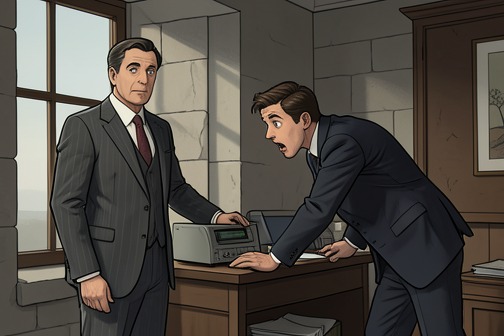
The exposure of the insulting denial letter during [Dot Black](entity:character-recall-character-dot-black-b1b1af2d4e7c)’s deposition turns a document presentation into a test of what [Great Benefit Life Insurance Company](entity:organization-recall-organization-great-benefit-li-1b1fecc4c37d) has disclosed—even to its own lawyers. The letter’s appearance reveals a gap in the defense file, while [Leo F. Drummond](entity:character-recall-character-leo-f-drummond-316f9ae6a846)’s visible shock gives [Tyrone Kipler](entity:character-recall-character-tyrone-kipler-cddd2f3e2d3c) grounds to warn that further concealment will carry penalties.
## Background and Document Presentation
The deposition had already stretched through hours of questioning. Drummond had spent much of the morning probing the Black family’s finances, including their home, cars, appliances, and [Buddy Black](entity:character-recall-character-buddy-black-cad147c0d4fb)’s injuries, employment, pension, and daily life. Tyrone Kipler pressed him to move on to relevant matters. Only halfway through the third hour did the questioning reach the insurance claim.
[Rudy Baylor](entity:character-recall-character-rudy-baylor-3da7e073af66) had prepared a complete, orderly set of documents relating to the claim, including [Donny Ray Black](entity:character-recall-character-donny-ray-black-d0072c3fb976)’s medical records. He and Kipler had reviewed the material and believed there was nothing in it they needed to hide. The defense had requested the same documents in written discovery, although Baylor’s own production deadline was still a week away. He expected the two sets to overlap, and anticipated that a later trip to the company’s [Cleveland](entity:location-recall-location-cleveland-dc87747d7e07) home office might bring another batch of records into view.
The policy and application were passed from Drummond to other members of the defense team and then made an exhibit to Dot’s deposition. The earlier denial letters followed the same slow circuit around the table. The paperwork’s routine handling concealed the significance of what was coming next: the lawyers had possessed the policy and application for months, but the next letter appeared to be new to Drummond.
## The Eighth Denial
Baylor had told Dot to hand the letter to Drummond without explaining its contents, so as not to alert him if he had never seen it. The document stated that the company had denied the claim in writing on seven previous occasions and was denying it for an eighth and final time. It then addressed Dot with the words, [“You must be stupid, stupid, stupid!”](entity:expression-recall-expression-you-must-be-stupid-0c9e7652f8a7)
Drummond read the letter, paused, and read it again. His mouth fell slightly open; wrinkles gathered across his forehead, and his eyes narrowed. Baylor watched him, and Drummond then looked toward Kipler, who was following his reactions. When Drummond passed the letter to a colleague, the colleague was initially inattentive, but soon registered its contents as well. To Baylor, the sequence made clear that Drummond had not previously seen the document; the company’s file had not included it.
The letter’s contents and its apparent absence from the defense file sharpened the moment. It was not simply another denial in the stack: it recorded seven earlier refusals, announced an eighth and final one, and expressed those refusals in an insult directed at the claimant. The letter also exposed a discovery problem, since the defense lawyers had been given a file that apparently omitted a document central to the claim.
## Kipler’s Warning and the Deposition’s Aftermath
Tyrone Kipler stopped the deposition and ordered the stenographer and video operator off the record. He told Drummond that it was obvious he had not seen the letter, and said he suspected it would not be the last document the client tried to conceal. Drawing on his experience suing insurance companies, Kipler warned that lost documents were familiar in such cases. If he caught Drummond or the company hiding evidence from the plaintiff, he would sanction both, including by imposing costs and attorney fees at the hourly rate Drummond charged his client.
Drummond asked whether Kipler was accusing him of hiding documents. Kipler said he was not—yet—and characterized his remarks as a warning. Drummond then asked Kipler to recuse himself. Kipler treated the request as a motion and denied it. The deposition resumed, with Kipler keeping his attention on Drummond.
The letter’s discovery did not end the examination. Questions and documents continued, and the parties broke for lunch before returning for the afternoon. Dot was exhausted; as the day went on, she took increasingly frequent restroom breaks, which allowed her to pace herself and slowed Drummond’s questioning. At 3:30, after six and a half hours, Kipler declared the deposition over. The immediate result was both evidentiary and procedural: the insulting letter was now on the record, and the judge had explicitly placed the defense on notice that further concealment could bring serious sanctions.
Event 23
Great Benefit conceals evidence and is sanctioned by Kipler
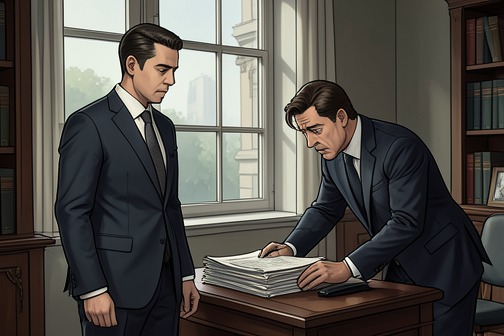
Great Benefit’s concealment of witnesses and a key document turns a routine deposition trip into a test of whether a small plaintiff’s case can force a powerful insurer to obey court orders. When [Rudy Baylor](entity:character-recall-character-rudy-baylor-3da7e073af66) finds that three scheduled witnesses are unavailable and the claim file lacks the Stupid Letter, Judge [Tyrone Kipler](entity:character-recall-character-tyrone-kipler-cddd2f3e2d3c) responds by shifting control of the discovery process toward Baylor and ordering Great Benefit to pay for the wasted journey to [Cleveland](entity:location-recall-location-cleveland-dc87747d7e07).
## Background and Stakes
The confrontation arises from the Black family’s bad-faith case against Great Benefit. The company’s claim file matters because it records how the insurer handled [Donny Ray Black](entity:character-recall-character-donny-ray-black-d0072c3fb976)’s request for coverage of a bone marrow transplant. In this kind of case, the sequence of letters, decisions, and internal communications can show whether a denial was an isolated mistake or part of a broader practice. Rudy is entitled to the file, and Judge Kipler has ordered that it be available at the start of the depositions.
The depositions are also supposed to give Rudy access to six witnesses he selected. Under Kipler’s order, they must be available at nine in the morning, remain on call until Rudy releases them, and be questioned in the order he chooses. Rudy arrives in Cleveland expecting to begin with [Jackie Lemancyzk](entity:character-recall-character-jackie-lemancyzk-ed51dd48f713), a claims handler, rather than [Jack Underhall](entity:character-recall-character-jack-underhall-79d33acbf901), Great Benefit’s corporate designee—the witness the defense lawyers would prefer to present first. Starting with the claims handler and obtaining the underlying file would let Rudy follow the claim’s history instead of accepting the company’s preferred overview.
## The Cleveland Confrontation
The defense team has spread papers across the table when its lawyer, T. Pierce, proposes beginning with Underhall. Rudy declines and asks first for Jackie and the claim file. Pierce then tells him Jackie no longer works for Great Benefit. She resigned late the previous week, after the parties had appeared in court on Thursday. Asked about another listed witness, junior claims examiner Tony Krick, Pierce says he has been downsized.
Rudy asks about the remaining names. Senior claims examiner [Richard Pellrod](entity:character-recall-character-richard-pellrod-a9d2c7120e3a) and Vice President of Claims [Everett Lufkin](entity:character-recall-character-everett-lufkin-2d977f179087) are present; Underhall is also available. Russell Krokit, the senior claims supervisor associated with the Stupid Letter, has left for another company. Great Benefit describes the departures as routine changes in staffing, but the timing alarms Rudy: three of the six witnesses named in the court order are suddenly gone. He tells the defense that the coincidence is striking and begins recording what he will need to do next.
The claim file arrives as a stack nearly five inches thick, neatly copied and bound with rubber bands. After an hour reviewing it, Rudy spots a conspicuous omission: the Stupid Letter is not there. Its absence is especially significant because [Dot Black](entity:character-recall-character-dot-black-b1b1af2d4e7c) had produced a copy during her deposition. Rudy had stamped that copy three times with the word COPY, while retaining the original in his own files. That marking lets him distinguish the copy already shown to the defense from the original document; the original’s presence in his possession does not explain why the insurer’s file lacks the letter.
## Kipler’s Response and Sanctions
Rudy calls Kipler from a separate room, with Pierce on the other phone. He reports that Jackie, Tony, and Russell are no longer employed by Great Benefit, and that the Stupid Letter is missing from the file. Pierce says he has not checked everything. Kipler asks Pierce to leave the room, then tells Rudy that the missing witnesses and document have given the court grounds to change the deposition arrangements. Rudy is to question Underhall, press him about the three departures, obtain the underwriting file, and return to [Memphis](entity:location-recall-location-memphis-43c9d5e0eed8); Kipler will hold a hearing later that week.
Underhall’s deposition lasts three hours. He produces two resignation letters and maintains that the departures had nothing to do with the lawsuit. Questions about Great Benefit’s ownership, corporate affiliations, products, markets, divisions, and personnel yield a complicated account that Rudy finds largely unhelpful. The deposition ends earlier than he had expected, but he leaves with additional documents and the prospect that the company’s witnesses will have to appear on his own ground.
At the hearing, Kipler orders a new round of depositions at the court in Memphis, scheduled for the following week. Great Benefit must produce Pellrod, Lufkin, Vice President of Underwriting [Kermit Aldy](entity:character-recall-character-kermit-aldy-099c7317a38f), Vice President of Administration Bradford Barnes, and chief executive [M. Wilfred Keeley](entity:character-recall-character-m-wilfred-keeley-d51b5b189ef7). They must travel at the company’s expense, remain available at the plaintiff’s discretion, and be ready for three days of questioning. Kipler also requires neatly copied, chronological documents before the depositions and warns that failure to comply will bring severe sanctions.
Kipler separately orders Great Benefit to reimburse Rudy for the Cleveland trip. The calculation includes the coach airfare he reports, an allowance for food and lodging, time valued at two hundred dollars an hour, and a court reporter’s fee. Rudy admits internally that his actual food and lodging cost less than the amount he claims in court; Kipler sets the sanction at $2,410, payable within five days, with the sum doubling for every day of nonpayment after that deadline. When [Leo F. Drummond](entity:character-recall-character-leo-f-drummond-316f9ae6a846) objects, Kipler rejects the effort to dispute the expense calculation and makes clear that the company must pay.
## Consequences in the Case
The order changes the practical balance of discovery. Great Benefit’s lawyers had expected to conduct the Cleveland sessions on their terms, with the corporate designee first and the plaintiff’s questioning constrained by the witnesses and records made available. Instead, Kipler places the next depositions near Rudy and his judge, gives Rudy control over when the witnesses are released, and makes Great Benefit bear the associated costs. The sanction is modest beside the resources of an insurer, but it recognizes that a plaintiff’s wasted time and travel have a value the defense cannot simply dismiss.
The missing letter also gains force beyond the discovery hearing. At trial, Dot reads the Stupid Letter and the earlier denial letters to the jury, while Jackie’s testimony describes Great Benefit’s initial denials of claims during 1991. Rudy later presents the concealed-document issue alongside the claims history and the evidence of the insurer’s denial practices. The Cleveland episode thus helps establish the pattern of resistance the jury will encounter: first the records are delayed, then a central letter is absent, and the court must intervene to compel access and impose a penalty.
## Significance
The episode makes procedure part of the conflict rather than a neutral backdrop. A court order specifies who must appear, when the file must be ready, and who controls the depositions; the defense’s explanations do not erase the immediate effect of three absent witnesses and an incomplete record. Kipler’s response gives those rules practical force, while Rudy’s insistence on the claim file and his careful marking of the letter’s copy make it harder for the document to disappear without question. The resulting sanctions do not themselves resolve the Black family’s claim, but they alter who controls the next stage of the case and help bring the insurer’s internal conduct into public view.
Event 24
Birdie’s sons learn of her will and take her to Florida
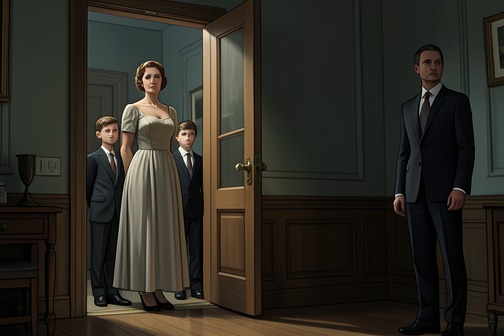
[Birdie’s sons learn of her will and take her to Florida](entity:event-recall-event-birdie-d9318950a33f) is a turning point in [Miss Birdie](entity:character-recall-character-miss-birdie-34b195a54978)’s relationship with her family and with [Rudy Baylor](entity:character-recall-character-rudy-baylor-3da7e073af66). The discovery of a will disposing of an apparent fortune draws her sons back into her life as self-appointed protectors; their eventual departure with her leaves Rudy outside the family circle, bound by confidentiality and uncertain whether her new attention is care or a prelude to controlling her inheritance.
## The Will Comes to Light
[Delbert Birdsong](entity:character-recall-character-delbert-birdsong-48cb5ad7553f) confronts Rudy in the kitchen after examining papers at Miss Birdie’s home. He asks whether Rudy has been interfering with their mother’s will. Rudy recognizes the document as what he believes to be her most recent will, prepared by her previous lawyer. It appears to dispose of around twenty million dollars, with a clause leaving Delbert two million. The sums explain why the document matters, but not how Delbert obtained it: Rudy believes Miss Birdie would not have handed it to him voluntarily, and cannot tell whether the copy he keeps under his bed has been disturbed.
The discovery also exposes a secret Miss Birdie had tried to keep from her sons: as far as she had maintained, neither Delbert nor Randolph knew about her money. Rudy does not know what her earlier wills provided, so he cannot tell whether the sons are satisfied with their apparent shares or resentful that they might receive more. Nor can he clarify the situation for them. His knowledge of Miss Birdie’s intentions is confidential, and he is troubled by the possibility that the private matter has been breached.
## A Family Reassembles
Delbert and his wife, Vera, soon bring Randolph into the dispute. Randolph arrives from Florida with his third wife, June, while the household fills with relatives and, later, grandchildren. The sons question Rudy about his low rent and how long he plans to stay in the apartment on their mother’s property. They say that they intend to help Miss Birdie manage her affairs and do not want her taken advantage of. Rudy sees Miss Birdie’s face brighten as her sons make demands and ask questions: despite his doubts about their concern, she appears content to have her family gathered around her.
The visit is not only a family confrontation. A lawyer named Roger Rice calls Rudy from a meeting with Delbert, Randolph, and Miss Birdie because he is working on a new will and wants to know whether Rudy has prepared one. Rudy confirms that he drafted a rough version months earlier but says Miss Birdie had not been willing to sign it. He cannot disclose her wish to leave her fortune to [Reverend Kenneth Chandler](entity:character-recall-character-reverend-kenneth-ch-d609bdda13d0), or confirm that the money exists. Rice reports hearing about a fortune connected to [Atlanta](entity:location-recall-location-9d501ca2fac1), but a sealed probate file is the limit of what Rudy himself can verify. Rudy offers to send the Atlanta lawyer’s contact information instead of revealing what his client has told him.
## From Suspicion to Departure
The relatives’ presence extends over more than two weeks, with rental cars crowding the driveway and family members questioning Miss Birdie about her affairs. Rudy remains apart from their conversations, sometimes listening from his darkened apartment. His account of their motives is openly skeptical: he imagines the family responding to the will as a sudden call to claim an inheritance. Yet he also recognizes that Miss Birdie enjoys being the center of attention, and that she seems happy while her sons and grandchildren surround her.
When the cars are finally gone, Randolph tells Rudy that Miss Birdie has flown to Florida to spend time with the family. She may not return. Randolph and Delbert will handle her business from then on, and they offer Rudy rent-free use of the house in exchange for tending it and doing its general upkeep. He accepts. Randolph gives him the house keys and contact numbers for the insurance agent and alarm company, along with his own address and telephone number; he is taking Miss Birdie’s Cadillac to Florida the following day. He says she will stay near Tampa, with a guest room and family nearby.
## What the Departure Leaves Behind
Rudy is touched by Randolph’s sincerity when he says that Miss Birdie likes and trusts him, but he suspects that the family will keep her under its influence and prevent her from changing her will. He feels guilty that he knows the truth about her wealth yet cannot share it. At the same time, he can see a real benefit in the move: the lonely woman is suddenly surrounded by relatives and receiving the attention she has long sought.
His recollection of Miss Birdie at the [Cypress Gardens Senior Citizens Building](entity:location-recall-location-cypress-gardens-seni-c23d1d1e9410)—leading songs, making speeches, working the crowd, and fussing over Bosco and the other residents—makes the change feel like both an ending and an uncertain new beginning. Rudy hopes the Florida sunshine will make her happy and wonders who will take her place at Cypress Gardens. The event resolves the immediate question of where she will live, but not whether her family’s renewed care will protect her wishes or narrow her freedom to revise them.
Event 25
Great Benefit refuses to pay Donny Ray Black’s treatment claim
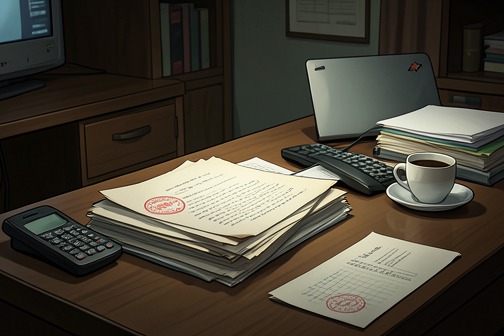
[Great Benefit Life Insurance Company](entity:organization-recall-organization-great-benefit-li-1b1fecc4c37d)’s refusal to pay [Donny Ray Black](entity:character-recall-character-donny-ray-black-d0072c3fb976)’s treatment claim turned a family’s effort to secure a covered bone marrow transplant into a test of the insurer’s claims practices. As the denial letters accumulated and evidence emerged at trial, [Rudy Baylor](entity:character-recall-character-rudy-baylor-3da7e073af66)’s case connected Donny Ray’s medical records to a broader 1991 policy of rejecting claims, exposing how the company’s procedures could keep payment out of reach even when a claim was legitimate.
## The claim and its stakes
[Dot Black](entity:character-recall-character-dot-black-b1b1af2d4e7c) had bought an inexpensive family policy, with premiums collected through regular visits from agent [Bobby Ott](entity:character-recall-character-bobby-ott-685fbe2edd34). When Donny Ray needed a bone marrow transplant for acute leukemia, she contacted Great Benefit Life Insurance Company repeatedly, sought help from public officials and local hospitals, and organized friends and neighbors to raise money. None of these efforts secured the treatment. Donny Ray’s medical records indicated that chemotherapy had not ended the danger: the leukemia was expected to return, and his doctor reported that the illness would ultimately be fatal without a transplant.
The policy’s wording became central to the dispute. Great Benefit Life Insurance Company’s defense later argued that the policy did not cover bone marrow transplants, but the policy listed exclusions for other transplantable organs and did not name bone marrow. The revised policy Rudy Baylor obtained included explicit language excluding bone marrow transplants. That contrast gave the dispute a precise documentary focus: the company’s position at trial depended on an exclusion absent from the policy the Black family had bought.
## Denials and delay
The Black claim was met not with one stable explanation but with a succession of denials. Dot Black read seven letters to the jury: some denied the claim outright, while others deferred it between claims and underwriting. The stated grounds shifted, including a preexisting-condition rationale, Donny Ray’s status as an adult who was not a household member, and assertions that bone marrow transplantation was not covered or was too experimental. The sequence left the family facing repeated obstacles while the treatment remained unpaid.
Earlier, [Max Leuberg](entity:character-recall-character-max-leuberg-34913c102c9e) had described debit insurance as low-cost coverage sold to people with limited resources, with premiums collected in small recurring payments. He warned Rudy Baylor that insurers knew many policyholders were afraid of lawyers and that only a small proportion of bad-faith denials reached court. In his account, the financial incentive was stark: a company might deny a valid claim, pay a comparatively small amount when challenged, and still retain savings from the many policyholders who never sued. That explanation framed the Black case as part of a structural problem, though the specific evidence of Great Benefit Life Insurance Company’s own practices emerged later.
## Evidence of a company policy
[Jackie Lemancyzk](entity:character-recall-character-jackie-lemancyzk-ed51dd48f713) testified that, beginning January 1, 1991, Great Benefit Life Insurance Company adopted a year-long experiment of initially denying every claim over $1,000, regardless of its merits. Some smaller claims were eventually paid, but larger claims were generally not paid unless an insured person hired a lawyer and pressed the matter. Lemancyzk said management regarded the experiment as successful and estimated that it produced about $40 million in additional gains. Her account transformed the Black family’s string of explanations from a collection of isolated decisions into evidence of an organized claims-denial policy.
Lemancyzk also described how the Black claim received special scrutiny once the company noticed the diagnosis of acute leukemia. Her account was that the company understood the transplant exclusion was missing, knew from the medical records that Donny Ray was terminally ill without treatment, and nevertheless continued the denial. She explained that the company was counting on the odds that policyholders would not consult a lawyer. According to her testimony, a lawyer’s involvement changed the company’s response: smaller legitimate claims might be paid, while larger ones could move to supervisors or be resolved through confidential settlements.
The paperwork helped explain how delay could be maintained inside the company. Great Benefit Life Insurance Company’s claims and underwriting departments passed files and instructions between them, with denial and further-review notices going to policyholders while the departments exchanged memos. [Cooper Jackson](entity:character-recall-character-cooper-jackson-61f117f0fd6c) described the procedure as post-claim underwriting; Rudy Baylor recognized parts of it in the documents already obtained through discovery. The manuals Jackson showed him contained matching [Section U](entity:expression-recall-expression-section-u-f7e7331ad1e1) provisions, including material absent from Rudy’s copy. When executive [Kermit Aldy](entity:character-recall-character-kermit-aldy-099c7317a38f) testified, he first characterized Section U as a system of checks and balances. Rudy then produced the complete manual, and the missing section exposed the instructions linking the two departments’ handling of claims.
## From private loss to courtroom proof
At trial, Dot Black’s testimony gave the documentary sequence a human context. She described her efforts to obtain care for her son, identified the policy and application, and read the denial letters aloud. The most damaging letter was read twice at Rudy Baylor’s request. The jury’s attention to the letters made the company’s shifting reasons part of the evidence rather than a dispute described only by counsel. Great Benefit Life Insurance Company’s defense maintained that the transplant was outside the policy and medically uncertain, but the policy’s omission of bone marrow and the medical testimony supporting the procedure undercut that account.
The trial also presented Donny Ray himself through a 31-minute edited recording of his deposition. The jury watched in silence, while Dot Black sat beside Rudy Baylor. The recording made the consequences of the unpaid claim immediate to the case: the legal dispute concerned not only what the policy covered, but treatment Donny Ray had needed and did not receive. Rudy Baylor later argued that the defense had offered no evidence contrary to [Dr. Walter Kord](entity:character-recall-character-dr-walter-kord-ab3c830078f9)’s testimony that transplantation was not experimental and quite probably would have saved Donny Ray’s life.
## Consequences and significance
Rudy Baylor’s closing argument brought together the policy language, the denial record, Lemancyzk’s account, and Great Benefit Life Insurance Company’s financial figures. He argued that the jury should judge the company’s conduct against its resources, while the defense offered a $200,000 framing of the dispute around the cost of the transplant and the Black family’s modest income. In rebuttal, Rudy challenged the timing of that offer, pointing out that the company had not made the same concession when the trial began. The jurors then left to deliberate; the evidence here establishes the case’s presentation and the start of deliberations, not their result.
The refusal therefore carried two connected meanings in the story. For the Black family, it was a concrete failure to fund treatment that Donny Ray’s doctors considered necessary. For the jury, the claim became a way to examine whether repeated denials, internal procedures, and the expectation that poor policyholders would give up formed a profitable corporate strategy. The case’s force came from the collision between an ambiguous policy clause and a detailed record of how the company acted once the claim arrived.
Event 26
Rudy Baylor discovers his office phone is tapped
[Rudy Baylor discovers his office phone is tapped](entity:event-recall-event-rudy-baylor-f547c54f4099) when [Deck Shifflet](entity:character-recall-character-deck-shifflet-d9acaca8aa29) and private investigator [Butch](entity:character-recall-character-butch-74da9308e1c5) uncover listening devices inside all three office phones. The discovery turns ordinary calls into a possible channel for stolen case information: a later call with opposing counsel is captured on a recorder, giving Rudy and [Deck](entity:character-recall-character-deck-b3382237668e) reason to suspect that the surveillance benefits the other side. Yet they cannot establish who installed the devices. Their response is therefore not an immediate accusation but a calculated effort to hide what they know and retain the recording as leverage.
## Discovery at the Office
The first warning comes after Rudy returns from [Donny Ray Black](entity:character-recall-character-donny-ray-black-d0072c3fb976)’s funeral. Deck is unnerved, and Butch, whom Deck introduces as a client, uses the opportunity to inspect a phone receiver. Inside its cover he finds a small, round, black device. Rudy initially does not understand what he is being shown; Deck’s conspicuously ordinary questions and nudges are meant to keep him talking while Butch examines the phone.
Deck and Butch explain the discovery over coffee, away from the office. Deck has been worried about federal investigators since [Bruiser Stone](entity:character-recall-character-bruiser-stone-a59658d034f9) and [Prince Thomas](entity:character-recall-character-prince-thomas-9490c826dc2b) disappeared, but Rudy learns that Deck has discussed those fears with Butch without telling him. Butch says he was asked to check the phones and has found identical devices in all three. He is not an expert in surveillance equipment, so he cannot say who installed them or what else might be hidden in the office. He proposes searching the premises, where microphones could be concealed in ordinary objects, but cautions that removing a device could alert whoever is listening. For now, the safest course is to behave as usual and speak carefully.
## Uncertain Source and a Second Inspection
Deck secretly takes one phone to an acquaintance who has reportedly worked for a branch of the military. The acquaintance identifies the device as unlike the bugs typically used by the [Federal Bureau of Investigation](entity:organization-recall-organization-federal-bureau-o-f1c5664278d2) or other law-enforcement agencies. It is described as a medium-quality model manufactured in Czechoslovakia, connected to a transmitter somewhere nearby. The report narrows one possibility without identifying the listener: the phones may not have been tapped by the authorities Rudy and Deck feared, but the person responsible remains unknown.
The uncertainty strains the partnership. Rudy asks Deck whether he has spoken to Bruiser Stone on the tapped phones. Deck denies doing so; Rudy recognizes the answer as a warning to stop asking sensitive questions in front of Butch. Butch then checks the devices again, and they remain in place. The three men have evidence that someone can listen, but no reliable way to learn who is listening, how much has been heard, or whether the office itself contains additional microphones. Even their attempt to investigate must be conducted as if it might be overheard.
## The Recorder and the Suspicion of Opposing Counsel
Rather than remove the bugs, Rudy devises a way to test whether information from his office is reaching the other side. He and Deck arrange a deliberately fictitious account of a settlement position by [Dot Black](entity:character-recall-character-dot-black-b1b1af2d4e7c), then have Deck repeat it in a phone conversation from the courthouse. The false account gives them a specific detail to watch for in later dealings. Their little firm buys a forty-dollar recorder from Radio Shack and wires it to Rudy’s phone, hoping that recording a call will not interfere with the listening device.
[Leo F. Drummond](entity:character-recall-character-leo-f-drummond-316f9ae6a846) calls to discuss a deposition date, then raises settlement. He says [Great Benefit Life Insurance Company](entity:organization-recall-organization-great-benefit-li-1b1fecc4c37d) will offer $175,000, describing the figure as the cost of the transplant and urging Rudy to speak to Dot Black. Rudy refuses to give an immediate answer. After the call, he and Deck replay the tape. Deck concludes that their phones have been bugged by the other side. The recording gives them reason to suspect that Drummond or his client knows what is being said in the office, but it does not reveal who planted the device or establish Drummond’s precise involvement. The distinction matters: the call is incriminating to Rudy and Deck, but they know that suspicion is not proof.
The recording also implicates Rudy in an ethical problem of his own. He has secretly recorded another lawyer without first disclosing the recorder, conduct he knows could expose him to professional discipline if he produced the tape. He weighs that risk against what he sees as the more serious possibility that his opponents are using intercepted communications. Neither man expects a complaint to Judge Kipler to help without proof, and they recognize that the jury cannot simply be told that the defense played dirty. Instead, they decide to keep the tape and wait for a moment when it might serve a tactical purpose.
## Consequences for the Case
Rudy later tells Drummond that Dot does not want to accept the settlement. He presents her supposed change of mind as an ordinary client decision, while privately recognizing the value of what the recorded offer suggests about the case’s stakes. The offer does not change the Black family’s aim: Dot wants a judgment establishing what happened to her son, not simply a payment. Rudy and Deck therefore preserve their course toward trial rather than treating the intercepted calls as a reason to abandon the case.
The discovery changes the meaning of the office itself. Its phones, which should carry confidential conversations, become potential routes for information to escape; even a routine settlement call must be treated as both negotiation and evidence. At the same time, the incident repeats the larger case’s conflict over concealed information. Rudy is trying to expose Great Benefit Life Insurance Company’s handling of claims while suspecting that someone is listening to his own conversations, and he must decide how far he can go in responding without compromising his professional obligations. The episode ends without identifying the listener or removing the bugs. What Rudy and Deck gain is not certainty, but a recording, a reason for suspicion, and a plan to turn their vulnerability into possible leverage.
Event 27
Great Benefit’s Section U document is exposed

[Great Benefit Life Insurance Company](entity:organization-recall-organization-great-benefit-li-1b1fecc4c37d)’s [Section U](entity:expression-recall-expression-section-u-f7e7331ad1e1) documents are exposed when [Rudy Baylor](entity:character-recall-character-rudy-baylor-3da7e073af66) discovers that the claims and underwriting manuals produced in discovery have had their final sections removed. Their reappearance transforms the Black family’s dispute over [Donny Ray Black](entity:character-recall-character-donny-ray-black-d0072c3fb976)’s transplant coverage into evidence of a structured company process for delaying and denying claims. The reveal is both documentary and theatrical: the missing sections explain the paper trail, while the contrast between the manuals and company witnesses makes concealment itself part of the case.
## Background: a claim delayed between departments
Before finding Section U, Rudy is already investigating a pattern in Great Benefit Life Insurance Company’s handling of claims. [Cooper Jackson](entity:character-recall-character-cooper-jackson-61f117f0fd6c) describes post-claim underwriting: a claim is denied, medical records from the preceding five years are requested, and another denial or review notice follows. The file then passes between claims and underwriting, with each department waiting for the other to authorize payment. Meanwhile, the policyholder receives letters and may give up before consulting a lawyer. Jackson says that only about one in twenty-five policyholders will seek legal help.
The arrangement is consequential because the departments work for the same company but, as Jackson explains it, operate without ordinary mutual knowledge of one another’s work. The accumulating correspondence can make a delay look like careful evaluation, even when no one resolves the file. Jackson points Rudy to storage boxes of documents and, crucially, to the manuals. Rudy already has copies obtained in discovery, but Jackson’s organized files give him a way to test whether those copies are complete.
## The missing sections
Rudy examines the dark green claims and underwriting manuals. At first they resemble the versions produced to him: handbooks with organized procedures, an outline, and a glossary. Then he finds Section U at the back of Jackson’s claims manual. A corresponding section appears in the underwriting manual. Read together, the two sections describe the mechanism Jackson has outlined: one department denies a claim and sends it onward, while the other is instructed not to pay until it receives further notice. That notice never arrives, leaving each department able to point to the other as the reason payment has not been made.
Section U also prescribes documentation for the process. It directs employees to record the steps taken so the company can later present the file as the product of diligent evaluation before denial. Rudy discovers that neither manual produced in discovery contains this section. The versions supplied to him were therefore not merely incomplete in a way that concealed a minor procedure; they omitted the parts that explain how the two departments’ actions fit together. He recognizes that the manuals can connect individual denial letters to an institutional method, rather than leaving them to appear as unrelated mistakes.
## The courtroom reveal
Rudy first establishes the significance of the produced claims manual through [Everett Lufkin](entity:character-recall-character-everett-lufkin-2d977f179087), Great Benefit Life Insurance Company’s vice president of claims. He has Lufkin describe it as the authoritative guide to claims handling and confirm that the copy is complete, that it was required in discovery, and that he personally selected the copy sent to the plaintiff. Only after those admissions does Rudy ask him to turn to Section U. Lufkin cannot find it.
Rudy then produces Jackson’s complete manual. The two copies carry the same January 1, 1991 revision date, but only the complete copy has Section U. Lufkin acknowledges that the section is present in one manual and absent from the other, yet cannot say who removed it. He describes the omission as a possible oversight without providing an account of how it happened. The encounter leaves the jury with a direct comparison: a company witness has certified the incomplete manual as whole, while the matching version exposes what was missing.
Rudy walks Lufkin through the section’s instructions. It directs handlers to deny every claim within three days of receipt, allows later review of some claims, and sends claims potentially worth more than five thousand dollars to underwriting with a denial notice. Other provisions use coded signals to distinguish policyholders who threaten legal action from those who are unlikely to resist. A further instruction requires a handler to prepare a check for the claim but send it and the file to underwriting with orders not to mail the check until claims gives further word. The procedure thus produces the appearance of a pending decision while preventing payment. Lufkin cannot explain what happens to the check or answer basic questions about the 1991 number of policies, claims, and denials.
The discovery is repeated with [Kermit Aldy](entity:character-recall-character-kermit-aldy-099c7317a38f), Great Benefit Life Insurance Company’s vice president of underwriting. Rudy begins with the incomplete underwriting manual delivered in discovery. Aldy recognizes that a section is missing and confirms that it was removed before the manual was provided, though he cannot identify who removed it. He characterizes Section U as a system of checks and balances intended to ensure proper handling. Rudy then presents the complete copy from Jackson’s files. The section proves as compromising as its counterpart in the claims manual, and the examination lays out the operation across both departments rather than leaving the jury with only one employee’s account.
## Meaning and consequences in the case
Section U’s exposure gives the denial letters in [Dot Black](entity:character-recall-character-dot-black-b1b1af2d4e7c)’s file a larger context. During her testimony, she reads the first seven letters, which offer shifting explanations: review by another department, a preexisting condition, Donny Ray’s household status, and claims that bone marrow transplants are excluded or experimental. The company’s manuals and testimony give the jury a way to understand those reversals not simply as confusion but as part of a denial process. Donny Ray’s terminal illness and the company’s knowledge of his condition make the consequences of delay concrete; the dispute is no longer only about how to interpret a policy.
[Jackie Lemancyzk](entity:character-recall-character-jackie-lemancyzk-ed51dd48f713)’s testimony later identifies the policy as a twelve-month experiment beginning January 1, 1991: claims above one thousand dollars were to be denied during that period, with some smaller claims also denied when an arguable reason could be found. She says the scheme generated roughly forty million dollars in additional savings. Her testimony connects the manuals’ procedures to a company-wide financial strategy and to the odds that policyholders would never hire counsel. The documents, employee accounts, and denial letters together let the jury follow the process from instruction to individual harm.
Rudy carries that chain of evidence into his closing argument. He uses Great Benefit Life Insurance Company’s own figures to place the number of policies, claims, and denials on a chalkboard, then relates the concealed documents and testimony to the company’s wealth and the purpose of punitive damages. The documentary reveal is therefore not the end of the event but the hinge of the plaintiff’s case: it makes the paper record legible as a system and supplies the jury with a way to connect corporate procedure, calculated delay, and Donny Ray’s denied treatment. The excerpt establishes the force of that presentation, but not the jury’s eventual verdict.
Event 28
Great Benefit 1991 claims-denial scheme
[Great Benefit Life Insurance Company](entity:organization-recall-organization-great-benefit-li-1b1fecc4c37d)’s 1991 claims-denial scheme made routine rejection a calculated business practice: for twelve months, the company denied every claim over $1,000, regardless of merit, and relied on the cost and difficulty of challenging a denial to keep much of the money. In the Black case, the procedure’s paper trail and testimony from a former employee revealed how that policy worked—and what it meant for an insured family facing a terminal illness.
## Design and Economic Incentives
The scheme began on January 1, 1991, as a one-year experiment. Jackie Lemancyzyk, a former claims examiner, testified that the company initially denied every claim, then reviewed some smaller claims that appeared legitimate. Many smaller claims were ultimately denied as well if the company could find an arguable basis. Larger claims were rarely paid unless the policyholder hired a lawyer and threatened legal action. According to Lemancyzyk, management viewed the experiment as a way to compare money saved through denials with the cost of quick settlements; she estimated that it generated roughly $40 million in additional proceeds.
The plan depended on the likelihood that policyholders would not challenge a refusal. [Max Leuberg](entity:character-recall-character-max-leuberg-34913c102c9e) described debit insurance, sometimes called street insurance, as inexpensive coverage sold door to door to low-income customers, with agents returning regularly to collect premiums. He told [Rudy Baylor](entity:character-recall-character-rudy-baylor-3da7e073af66) that studies suggested only about one in thirty bad-faith denials ended up in court. Lemancyzk separately testified that the company counted on few claimants consulting lawyers, with roughly one in twenty-five believed likely to do so. The figures are presented as different estimates, but both explain the strategy’s appeal: if most customers gave up, even an improper denial could remain profitable.
## Paperwork as a Denial Mechanism
The claims process could make an unanswered refusal look like an ongoing review. As [Cooper Jackson](entity:character-recall-character-cooper-jackson-61f117f0fd6c) explained to Baylor, a handler would deny a claim, obtain five years of medical records, and send a further letter saying the claim was denied pending review. The file then moved to underwriting, which could instruct claims not to pay until further notice. Correspondence passed between the two departments while the insured received letters from each. Although both departments worked for the same company, they operated at a remove from one another; meanwhile, the paperwork accumulated and the claimant could be left waiting.
The manuals gave the process a documentary form. Jackson showed Baylor the claims and underwriting handbooks, where he found a [Section U](entity:expression-recall-expression-section-u-f7e7331ad1e1) in each manual. Read together, the sections described the exchanges between departments and their instructions not to pay. The version of the claims manual Great Benefit Life Insurance Company had produced in discovery did not contain the section Baylor found in Jackson’s copy. At [Dot Black](entity:character-recall-character-dot-black-b1b1af2d4e7c)’s deposition, the company’s lawyer, [Leo F. Drummond](entity:character-recall-character-leo-f-drummond-316f9ae6a846), appeared surprised when he read the eighth denial letter, known as The Stupid Letter. Judge [Tyrone Kipler](entity:character-recall-character-tyrone-kipler-cddd2f3e2d3c) warned that concealment of documents could bring sanctions against both the company and its lawyer.
## The Black Claim and the Courtroom Exposure
[Donny Ray Black](entity:character-recall-character-donny-ray-black-d0072c3fb976)’s claim showed how the scheme could operate even when the company had reason to know the stakes. Lemancyzyk testified that the claim was first denied like others, but its references to acute leukemia brought it under closer monitoring. She said the company recognized that the policy did not exclude bone marrow transplants, and that medical records indicated Donny Ray’s leukemia would eventually be fatal without one. She testified that the decision to continue denying the claim persisted despite that knowledge.
At trial, Dot Black read the jury the first seven denial letters, which offered shifting grounds: review by the other department, a preexisting condition, Donny Ray’s status as an adult outside the household, lack of transplant coverage, and the assertion that the treatment was experimental. She then read The Stupid Letter, which rejected the claim for an eighth and final time in insulting terms. The defense team’s response and the jury’s visible reaction made the letter a dramatic piece of evidence, not merely another item in the file.
Lemancyzyk supplied the policy’s broader context. She testified that all claims were initially denied during the experiment and that claims above $1,000 were denied for the twelve-month period regardless of legitimacy. When [Kermit Aldy](entity:character-recall-character-kermit-aldy-099c7317a38f) described Section U as a system of checks and balances, Baylor produced the complete underwriting manual, including the section missing from the version supplied in discovery. That confrontation showed the jury that the procedures were not simply separate departments’ routine paperwork: the missing material connected their roles in the denial process.
## Consequences and Significance
Baylor’s closing argument joined the documents and testimony into a causal account: company decision-makers had chosen a year of denials to generate savings, while customers such as Donny Ray bore the consequences. He also used Great Benefit Life Insurance Company’s financial figures to argue that punishment had to be measured against the company’s resources, putting $475 million in cash, reserves, and undistributed surpluses beside its admitted net worth of $450 million. The point was not only to recover the cost of a denied treatment, but to make the penalty meaningful for a wealthy corporation.
After the verdict, reports described investigations in at least seven states, including [Ohio](entity:location-recall-location-4c66c89ead05), and policyholder suits being filed around the country, with more expected. The [Memphis](entity:location-recall-location-memphis-43c9d5e0eed8) result was anticipated to encourage further litigation. The scheme’s exposure thus moved beyond one claim: a process built on routine denials and burdensome review became evidence of corporate conduct that other policyholders and regulators could investigate.